Abrir la app

Asignaturas

MatemáticasMatemáticas368 visualizaciones·Actualizado 22 de ago de 2026·4 páginas

Tipos de Conjuntos Matemáticos y Ejemplos para Niños

user profile picture
JuanDa Lo@juanda
  • Tipos de conjuntos matemáticosare explained, including finite, infinite, unitary,...
1
of 4
El conjunto – página 1

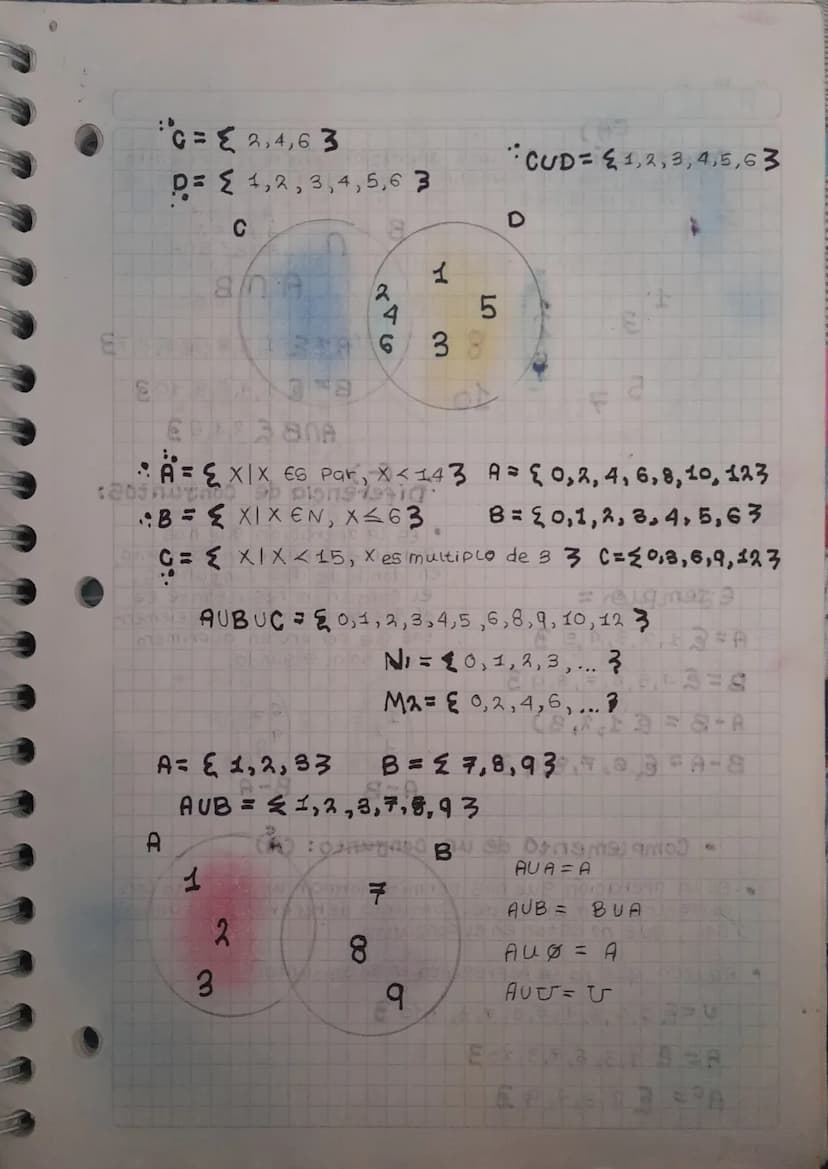
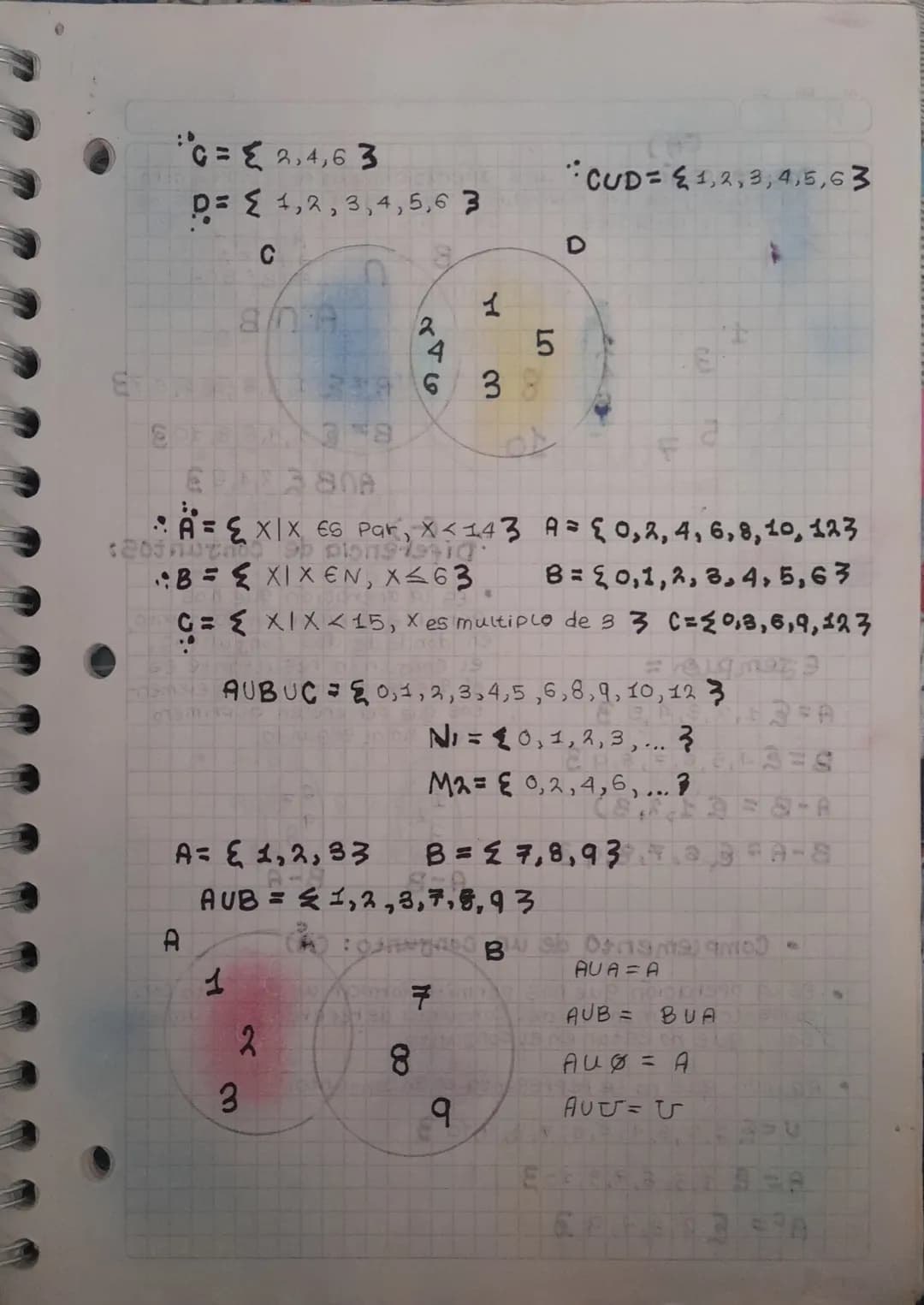
Unión de Conjuntos

This page delves deeper into the union operation between sets, providing more ejemplos de conjuntos and their unions. It demonstrates how to perform union operations with different types of sets, including those defined by specific conditions.

Example: Given sets A = {x | x is even, x < 14} and B = {x | x ∈ N, x ≤ 6}, the union A ∪ B ∪ C is calculated.

The page also introduces important properties of set unions, such as:

  • A ∪ A = A (union of a set with itself)
  • A ∪ B = B ∪ A (commutative property)
  • A ∪ ∅ = A (union with an empty set)
  • A ∪ U = U (union with the universal set)

These properties are fundamental in understanding operaciones entre conjuntos and form the basis for more complex set theory concepts.

2
of 4
El conjunto – página 2

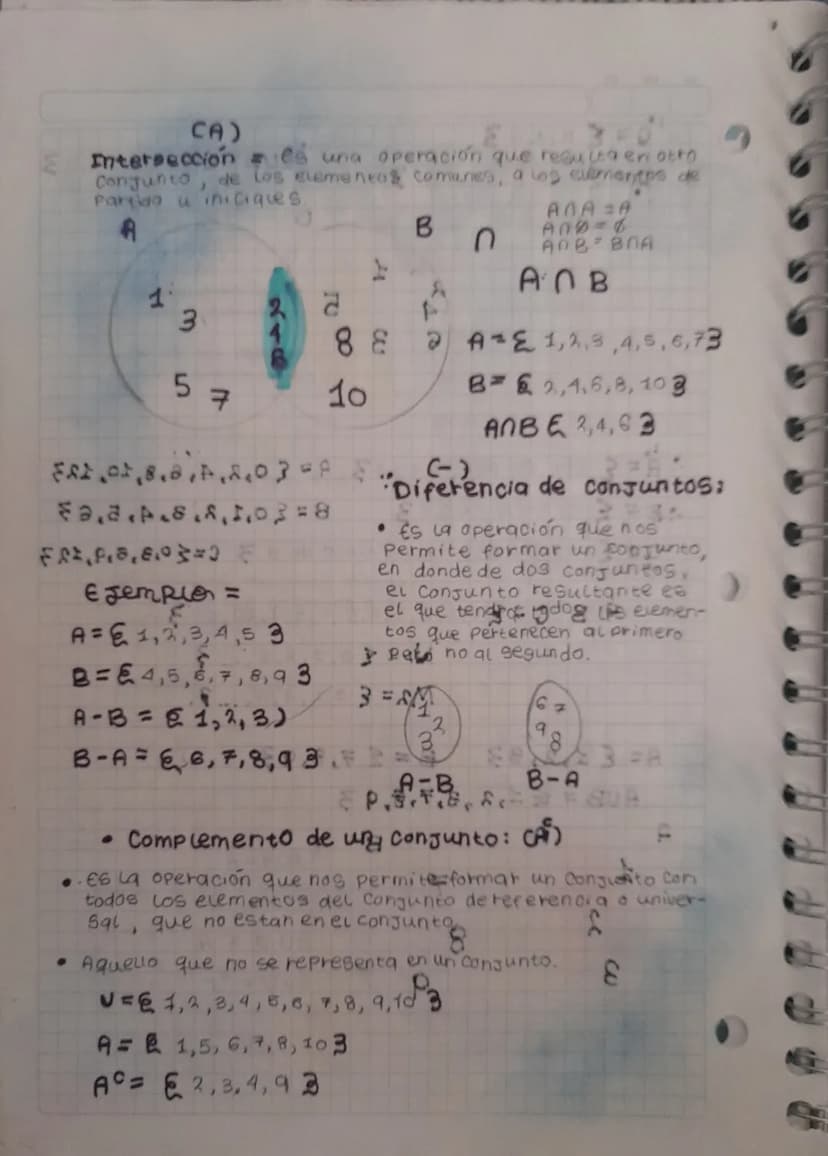
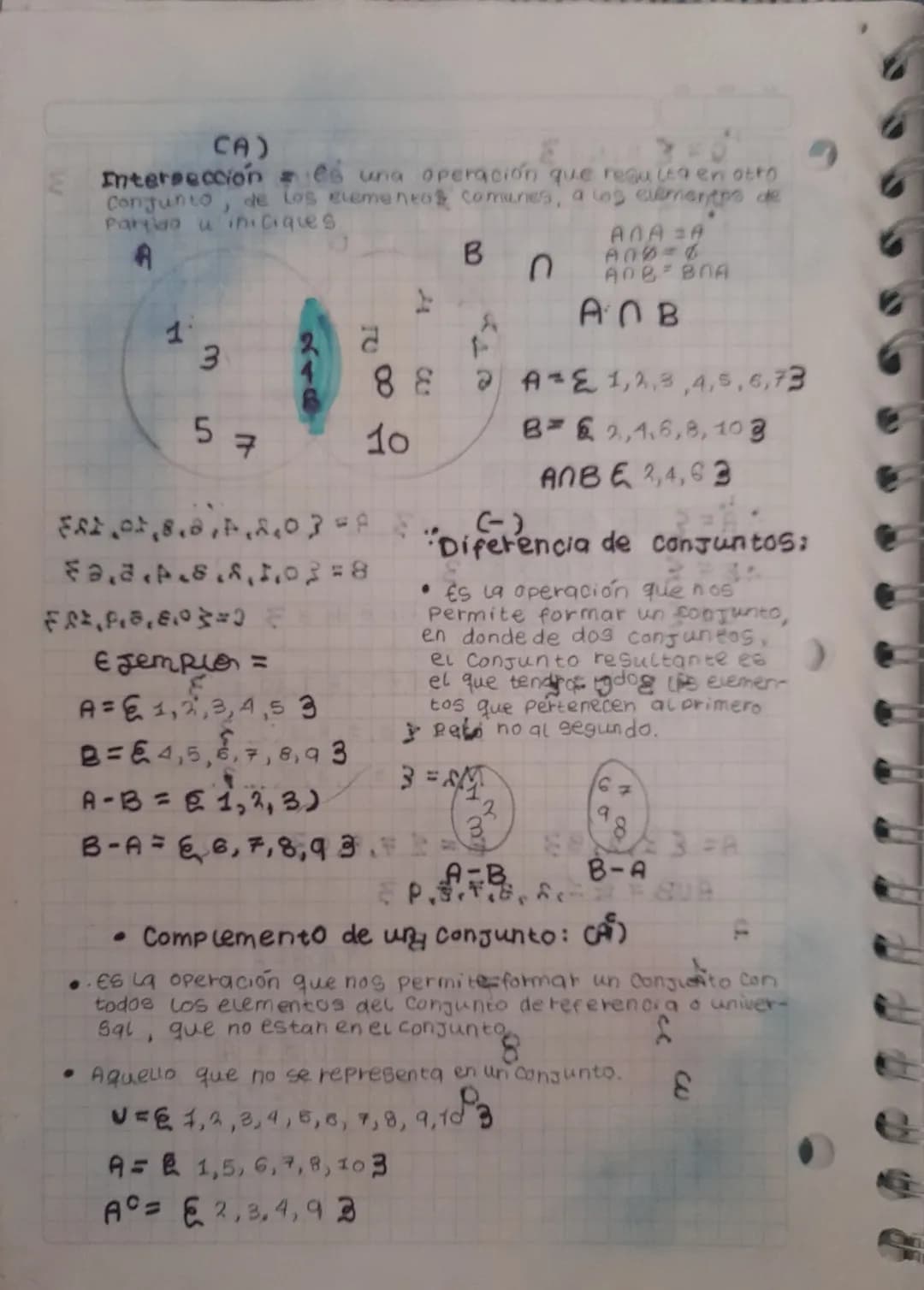
Intersección y Diferencia de Conjuntos

This page introduces two more operaciones entre conjuntos: intersection and difference. The intersection of sets is defined as an operation that results in another set containing the common elements of the initial sets. Set difference is explained as an operation that forms a set with elements that belong to the first set but not to the second.

Definition: The intersection of sets A and B, denoted as A ∩ B, is the set of all elements that belong to both A and B.

Example: For sets A = {1, 2, 3, 4, 5} and B = {2, 4, 6, 8, 10}, the intersection A ∩ B = {2, 4}.

The page also covers the concept of set complement, which is the operation that forms a set with all elements of the universal set that are not in the given set. This is particularly important in understanding the relationships between sets within a universal set.

These operaciones de conjuntos unión, intersección, diferencia y complemento are crucial in developing a comprehensive understanding of set theory and its applications.


3
of 4
El conjunto – página 3

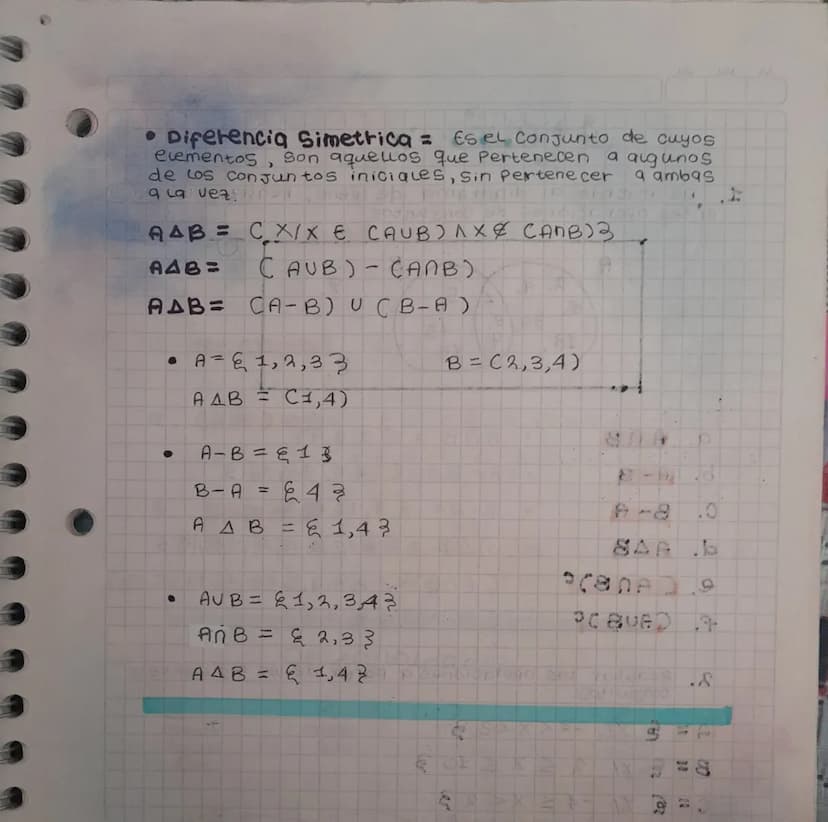
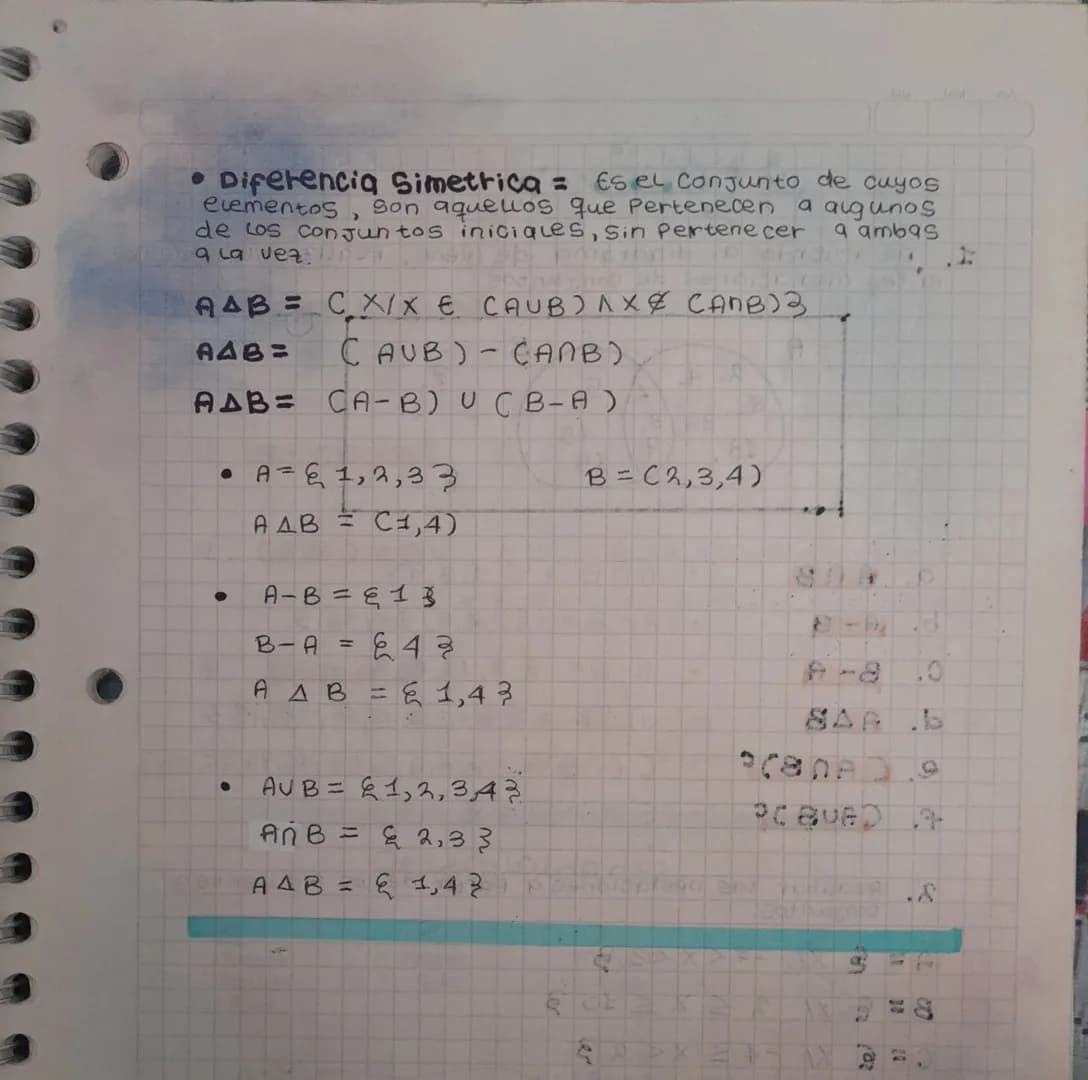
Diferencia Simétrica

The final page introduces the concept of symmetric difference in set theory. This operation is defined as the set of elements that belong to either of the initial sets, but not to both simultaneously.

Definition: The symmetric difference of sets A and B, denoted as A Δ B, is the set of elements that are in A or B, but not in both.

The page provides the following formulas for calculating symmetric difference:

  • A Δ B = (A ∪ B) - (A ∩ B)
  • A Δ B = ABA - BBAB - A

An example is given to illustrate this concept:

Example: For sets A = {1, 2, 3} and B = {2, 3, 4}, the symmetric difference A Δ B = {1, 4}.

This page concludes the overview of basic set operations, providing students with a comprehensive introduction to teoría de conjuntos. The examples and visual representations throughout the document help reinforce the concepts, making it suitable for young students learning about set theory.

4
of 4
El conjunto – página 4

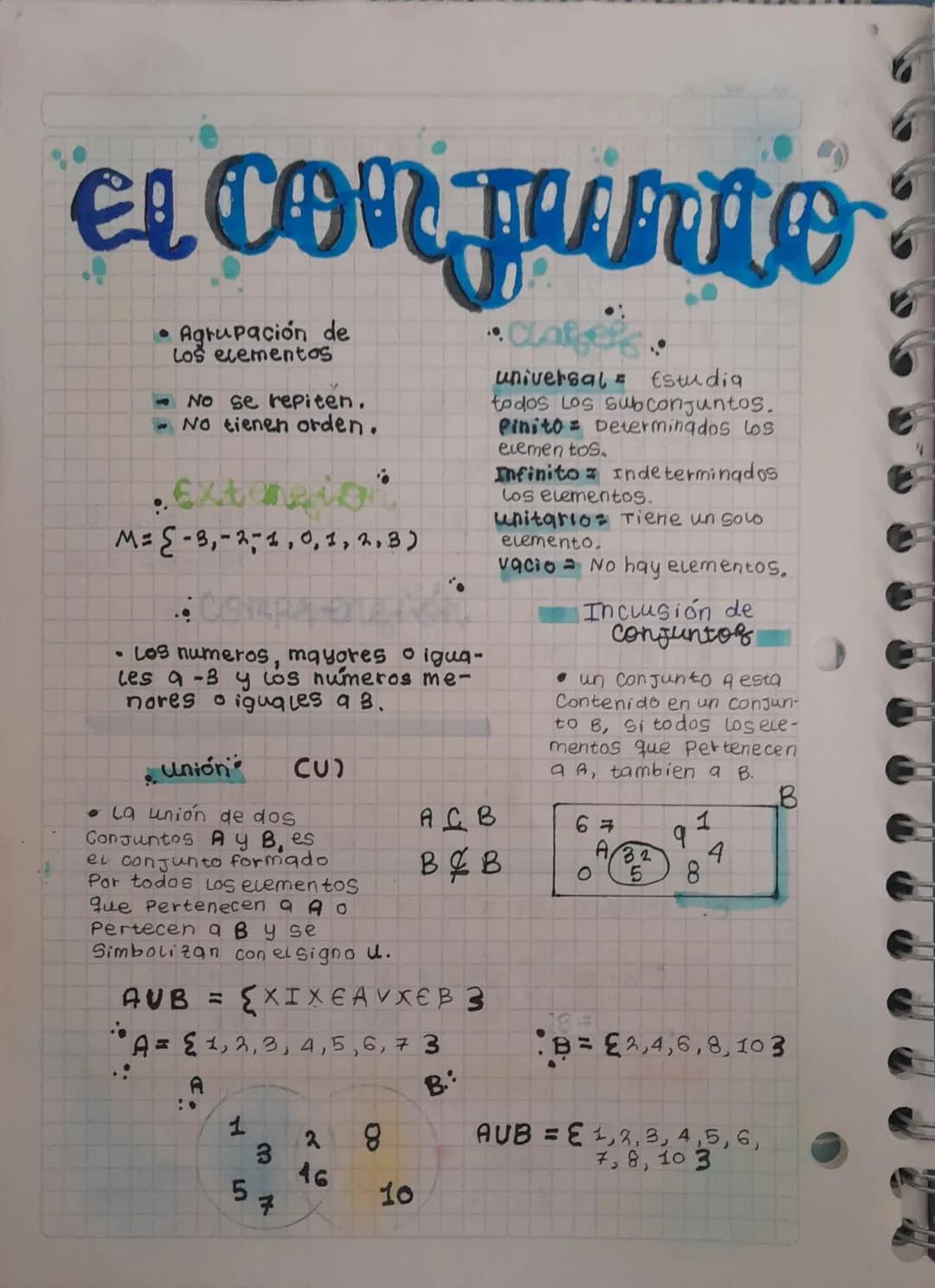
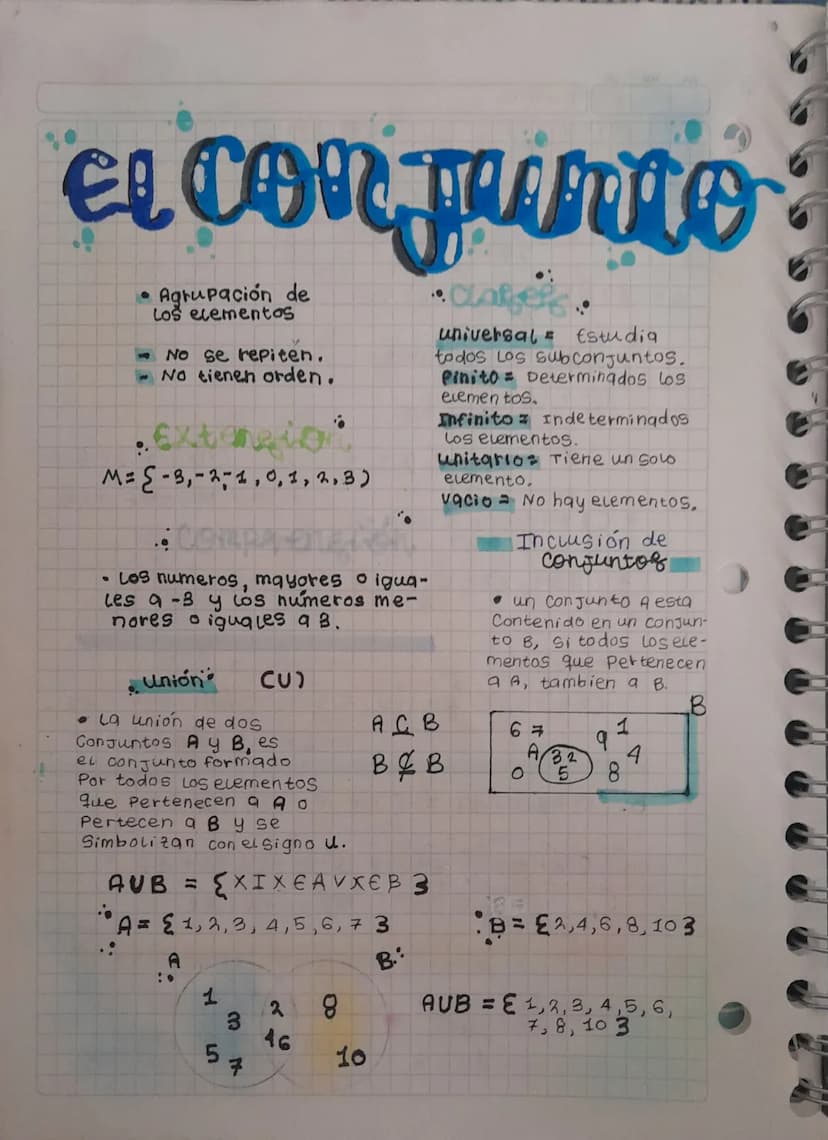
El Conjunto

This page introduces the concept of sets in mathematics. A set is defined as a grouping of elements without repetition or specific order. The page covers different tipos de conjuntos matemáticos, including finite, infinite, unitary, and empty sets. It also explains the concept of set inclusion and introduces the union operation between sets.

Definition: A set is a grouping of elements that do not repeat and have no specific order.

Example: M = {-3, -2, 1, 0, 1, 2, 3} is a set of numbers greater than or equal to -3 and less than or equal to 3.

The page provides ejemplos de conjuntos to illustrate various types of sets and operations. It explains that the union of two sets A and B is the set formed by all elements that belong to A or B, symbolized by A ∪ B. The page concludes with an example of a union operation between two sets.

Pensamos que nunca lo preguntarías...

Nuestro compañero de IA está específicamente adaptado a las necesidades de los estudiantes. Basándonos en los millones de contenidos que tenemos en la plataforma, podemos dar a los estudiantes respuestas realmente significativas y relevantes. Pero no se trata solo de respuestas, el compañero también guía a los estudiantes a través de sus retos de aprendizaje diarios, con planes de aprendizaje personalizados, cuestionarios o contenidos en el chat y una personalización del 100% basada en las habilidades y el desarrollo de los estudiantes.

Puedes descargar la app en Google Play Store y Apple App Store.

¡Sí lo es! Tienes acceso totalmente gratuito a todo el contenido de la app, puedes chatear con otros alumnos y recibir ayuda inmeditamente. Puedes ganar dinero utilizando la aplicación, que te permitirá acceder a determinadas funciones.

Contenidos más populares: Set Theory

1

Contenidos más populares de Matemáticas

9

Contenidos más populares

9

Mira lo que dicen nuestros usuarios. Les encantó — y a ti también te encantará.

4.6/5App Store
4.7/5Google Play

La app es muy fácil de usar y está muy bien diseñada. Hasta ahora he encontrado todo lo que estaba buscando y he podido aprender mucho de las presentaciones. Definitivamente utilizaré la aplicación para un examen de clase. Y, por supuesto, también me sirve mucho de inspiración.

Pablousuario de iOS

Esta app es realmente genial. Hay tantos apuntes de clase y ayuda [...]. Tengo problemas con matemáticas, por ejemplo, y la aplicación tiene muchas opciones de ayuda. Gracias a Knowunity, he mejorado en mates. Se la recomiendo a todo el mundo.

Elenausuaria de Android

Vaya, estoy realmente sorprendida. Acabo de probar la app porque la he visto anunciada muchas veces y me he quedado absolutamente alucinada. Esta app es LA AYUDA que quieres para el insti y, sobre todo, ofrece muchísimas cosas, como ejercicios y hojas informativas, que a mí personalmente me han sido MUY útiles.

Anausuaria de iOS

MatemáticasMatemáticas368 visualizaciones·Actualizado 22 de ago de 2026·4 páginas

Tipos de Conjuntos Matemáticos y Ejemplos para Niños

user profile picture
JuanDa Lo@juanda
  • Tipos de conjuntos matemáticos are explained, including finite, infinite, unitary, and empty sets.
  • The document covers basic operaciones entre conjuntos such as union, intersection, difference, and complement.
  • Ejemplos de conjuntos are provided throughout to illustrate key concepts.
  • Elementos de un...
1
of 4
El conjunto – página 1

Inscríbete para ver los apuntes. ¡Es gratis!

  • Acceso a todos los documentos
  • Mejora tus notas
  • Únete a millones de estudiantes

Al registrarte aceptas las Condiciones del servicio y la Política de privacidad.

Unión de Conjuntos

This page delves deeper into the union operation between sets, providing more ejemplos de conjuntos and their unions. It demonstrates how to perform union operations with different types of sets, including those defined by specific conditions.

Example: Given sets A = {x | x is even, x < 14} and B = {x | x ∈ N, x ≤ 6}, the union A ∪ B ∪ C is calculated.

The page also introduces important properties of set unions, such as:

  • A ∪ A = A (union of a set with itself)
  • A ∪ B = B ∪ A (commutative property)
  • A ∪ ∅ = A (union with an empty set)
  • A ∪ U = U (union with the universal set)

These properties are fundamental in understanding operaciones entre conjuntos and form the basis for more complex set theory concepts.

2
of 4
El conjunto – página 2

Inscríbete para ver los apuntes. ¡Es gratis!

  • Acceso a todos los documentos
  • Mejora tus notas
  • Únete a millones de estudiantes

Al registrarte aceptas las Condiciones del servicio y la Política de privacidad.

Intersección y Diferencia de Conjuntos

This page introduces two more operaciones entre conjuntos: intersection and difference. The intersection of sets is defined as an operation that results in another set containing the common elements of the initial sets. Set difference is explained as an operation that forms a set with elements that belong to the first set but not to the second.

Definition: The intersection of sets A and B, denoted as A ∩ B, is the set of all elements that belong to both A and B.

Example: For sets A = {1, 2, 3, 4, 5} and B = {2, 4, 6, 8, 10}, the intersection A ∩ B = {2, 4}.

The page also covers the concept of set complement, which is the operation that forms a set with all elements of the universal set that are not in the given set. This is particularly important in understanding the relationships between sets within a universal set.

These operaciones de conjuntos unión, intersección, diferencia y complemento are crucial in developing a comprehensive understanding of set theory and its applications.
3
of 4
El conjunto – página 3

Inscríbete para ver los apuntes. ¡Es gratis!

  • Acceso a todos los documentos
  • Mejora tus notas
  • Únete a millones de estudiantes

Al registrarte aceptas las Condiciones del servicio y la Política de privacidad.

Diferencia Simétrica

The final page introduces the concept of symmetric difference in set theory. This operation is defined as the set of elements that belong to either of the initial sets, but not to both simultaneously.

Definition: The symmetric difference of sets A and B, denoted as A Δ B, is the set of elements that are in A or B, but not in both.

The page provides the following formulas for calculating symmetric difference:

  • A Δ B = (A ∪ B) - (A ∩ B)
  • A Δ B = ABA - BBAB - A

An example is given to illustrate this concept:

Example: For sets A = {1, 2, 3} and B = {2, 3, 4}, the symmetric difference A Δ B = {1, 4}.

This page concludes the overview of basic set operations, providing students with a comprehensive introduction to teoría de conjuntos. The examples and visual representations throughout the document help reinforce the concepts, making it suitable for young students learning about set theory.

4
of 4
El conjunto – página 4

Inscríbete para ver los apuntes. ¡Es gratis!

  • Acceso a todos los documentos
  • Mejora tus notas
  • Únete a millones de estudiantes

Al registrarte aceptas las Condiciones del servicio y la Política de privacidad.

El Conjunto

This page introduces the concept of sets in mathematics. A set is defined as a grouping of elements without repetition or specific order. The page covers different tipos de conjuntos matemáticos, including finite, infinite, unitary, and empty sets. It also explains the concept of set inclusion and introduces the union operation between sets.

Definition: A set is a grouping of elements that do not repeat and have no specific order.

Example: M = {-3, -2, 1, 0, 1, 2, 3} is a set of numbers greater than or equal to -3 and less than or equal to 3.

The page provides ejemplos de conjuntos to illustrate various types of sets and operations. It explains that the union of two sets A and B is the set formed by all elements that belong to A or B, symbolized by A ∪ B. The page concludes with an example of a union operation between two sets.

Pensamos que nunca lo preguntarías...

Nuestro compañero de IA está específicamente adaptado a las necesidades de los estudiantes. Basándonos en los millones de contenidos que tenemos en la plataforma, podemos dar a los estudiantes respuestas realmente significativas y relevantes. Pero no se trata solo de respuestas, el compañero también guía a los estudiantes a través de sus retos de aprendizaje diarios, con planes de aprendizaje personalizados, cuestionarios o contenidos en el chat y una personalización del 100% basada en las habilidades y el desarrollo de los estudiantes.

Puedes descargar la app en Google Play Store y Apple App Store.

¡Sí lo es! Tienes acceso totalmente gratuito a todo el contenido de la app, puedes chatear con otros alumnos y recibir ayuda inmeditamente. Puedes ganar dinero utilizando la aplicación, que te permitirá acceder a determinadas funciones.

Contenidos más populares: Set Theory

1

Contenidos más populares de Matemáticas

9

Contenidos más populares

9

Mira lo que dicen nuestros usuarios. Les encantó — y a ti también te encantará.

4.6/5App Store
4.7/5Google Play

La app es muy fácil de usar y está muy bien diseñada. Hasta ahora he encontrado todo lo que estaba buscando y he podido aprender mucho de las presentaciones. Definitivamente utilizaré la aplicación para un examen de clase. Y, por supuesto, también me sirve mucho de inspiración.

Pablousuario de iOS

Esta app es realmente genial. Hay tantos apuntes de clase y ayuda [...]. Tengo problemas con matemáticas, por ejemplo, y la aplicación tiene muchas opciones de ayuda. Gracias a Knowunity, he mejorado en mates. Se la recomiendo a todo el mundo.

Elenausuaria de Android

Vaya, estoy realmente sorprendida. Acabo de probar la app porque la he visto anunciada muchas veces y me he quedado absolutamente alucinada. Esta app es LA AYUDA que quieres para el insti y, sobre todo, ofrece muchísimas cosas, como ejercicios y hojas informativas, que a mí personalmente me han sido MUY útiles.

Anausuaria de iOS