
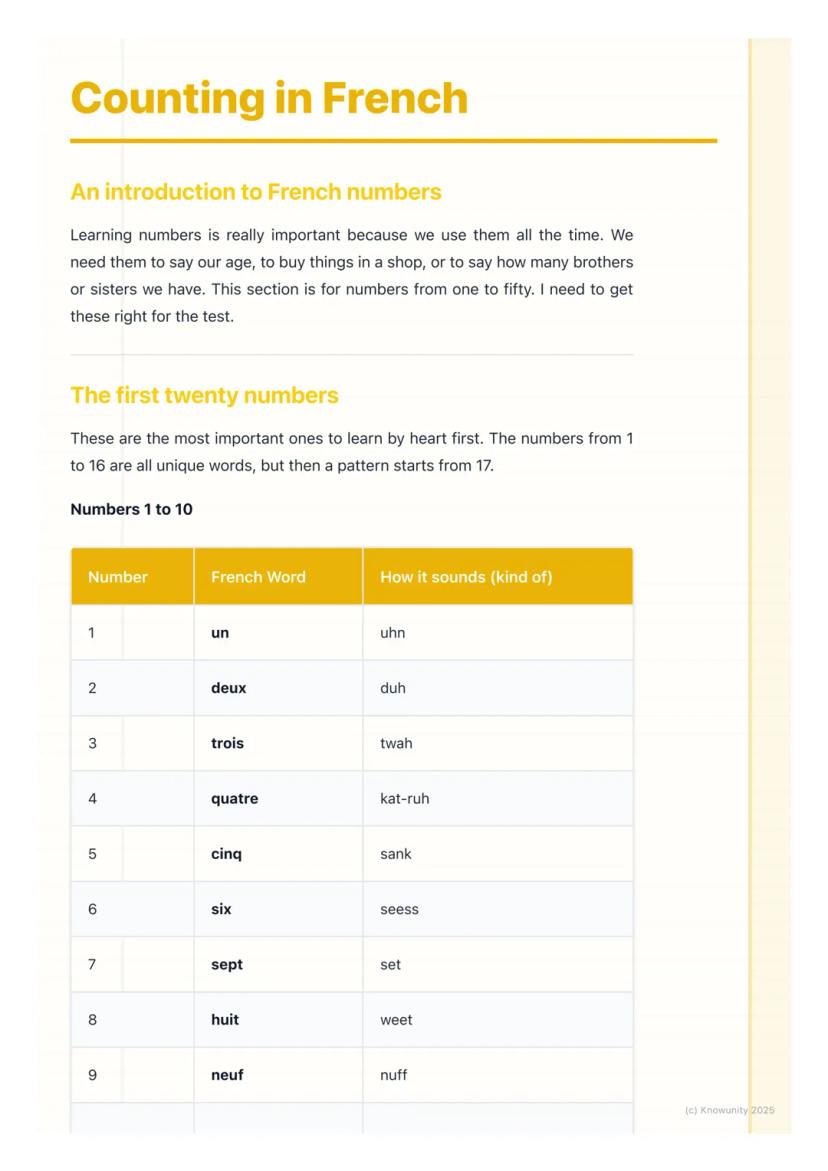
Learning French numbers might seem tricky at first, but it's...
 French10 visualizaciones·Actualizado Jun 12, 2026·5 páginas
Master French Numbers: Count from 1 to 50

1 / 5
1
of 5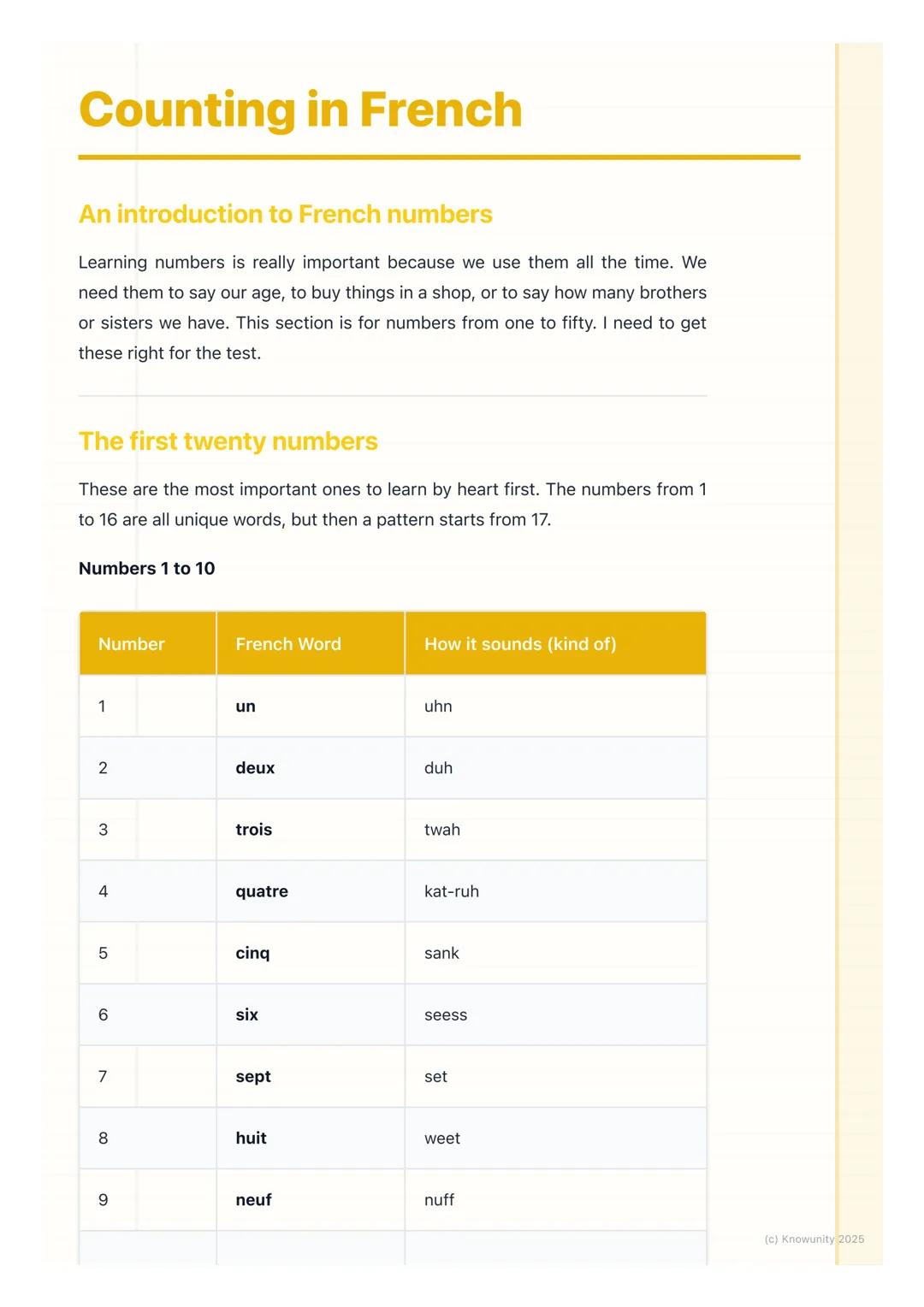
Getting Started with French Numbers 1-20
French numbers from 1-10 are completely unique words that you'll need to memorise properly. Think of them as your building blocks - once you've got these down, everything else becomes much easier!
The key ones to nail first are: un (1), deux (2), trois (3), quatre (4), cinq (5), six (6), sept (7), huit (8), neuf (9), and dix (10). Don't worry about perfect pronunciation yet - just get familiar with how they look.
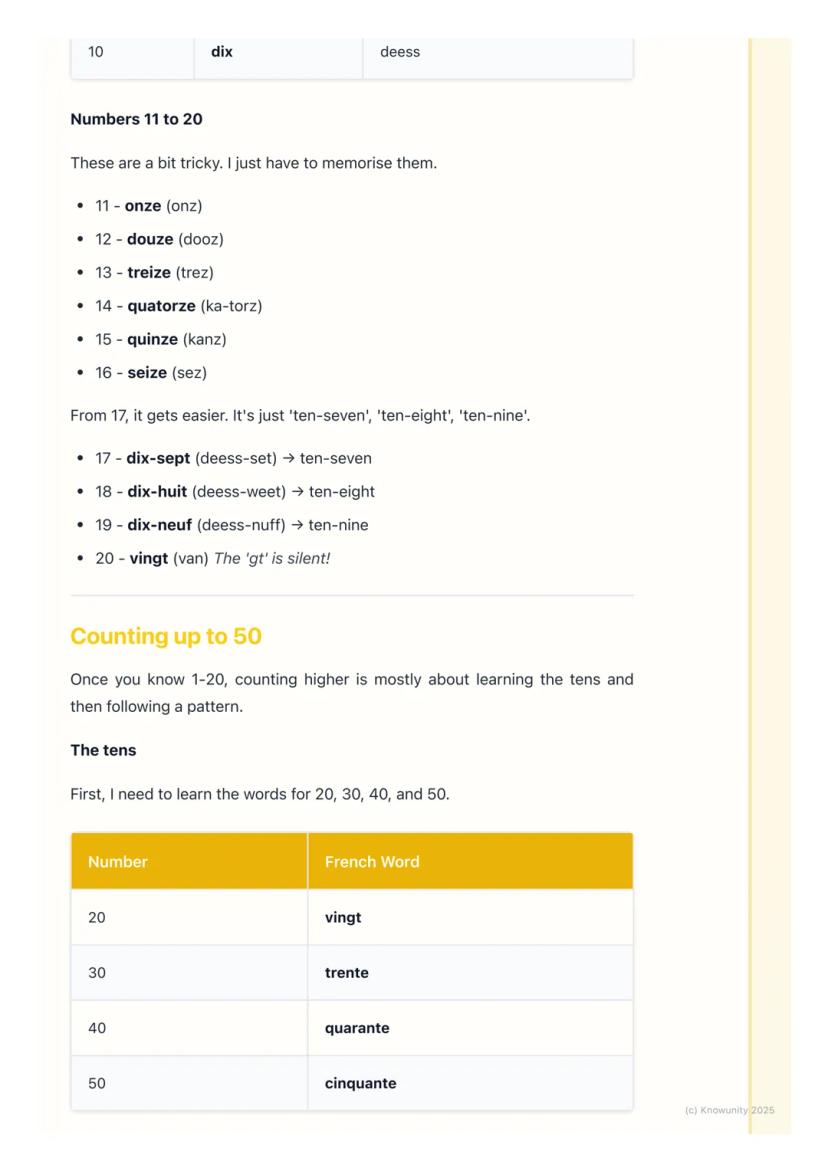
Numbers 11-16 are special cases that you'll have to learn separately: onze, douze, treize, quatorze, quinze, seize. There's no pattern here, so it's just memorisation time!
Quick Tip: Practice writing out numbers 1-16 from memory. Once you can do this without looking, you're ready for the clever bit that comes next!
2
of 5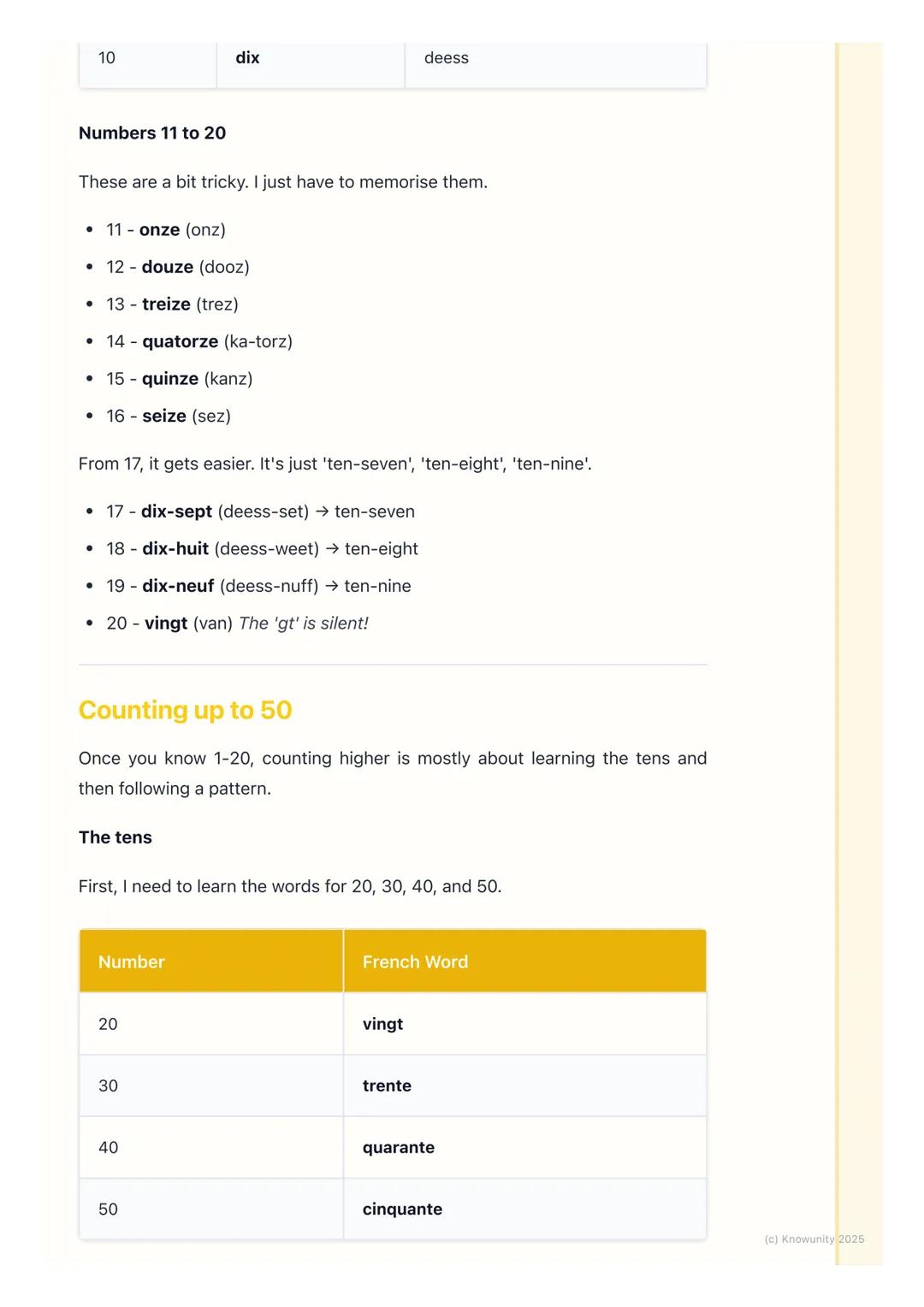
The Clever Pattern from 17-20 and Beyond
Here's where French gets really smart! Numbers 17-19 follow a simple pattern: they're literally "ten-seven", "ten-eight", "ten-nine". So you get dix-sept (17), dix-huit (18), and dix-neuf (19). Brilliant, right?
Twenty is "vingt" - and watch out because the 'gt' at the end is silent! This trips up loads of people, so remember it sounds like "van", not "vingt".
Now you need to learn the tens: vingt (20), trente (30), quarante (40), and cinquante (50). These are your next building blocks for making bigger numbers.
Remember: The teens from 11-16 are weird, but 17-19 follow the "dix-" pattern. After that, it's all about combining tens with units!
3
of 5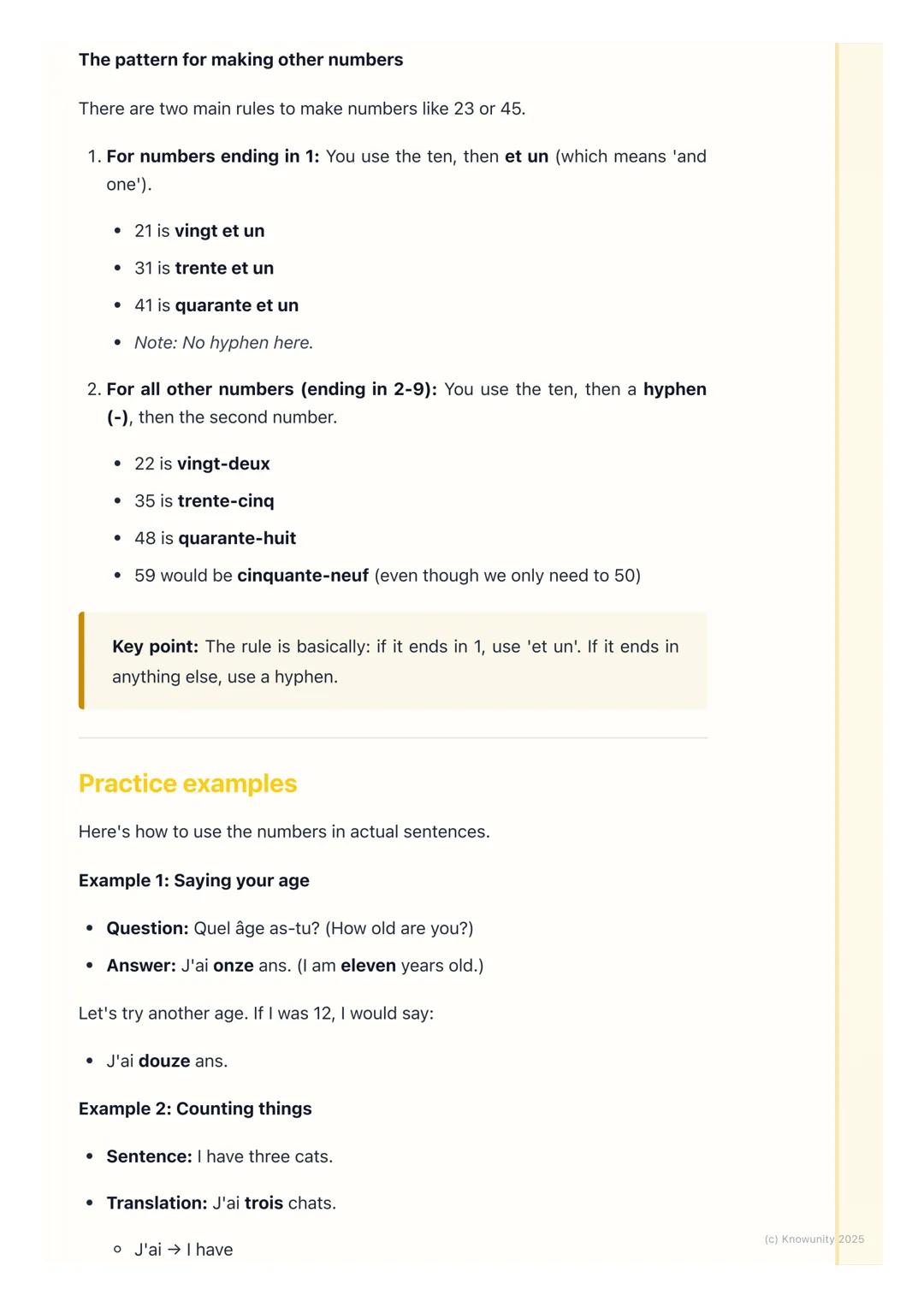
The Two Golden Rules for Making Numbers
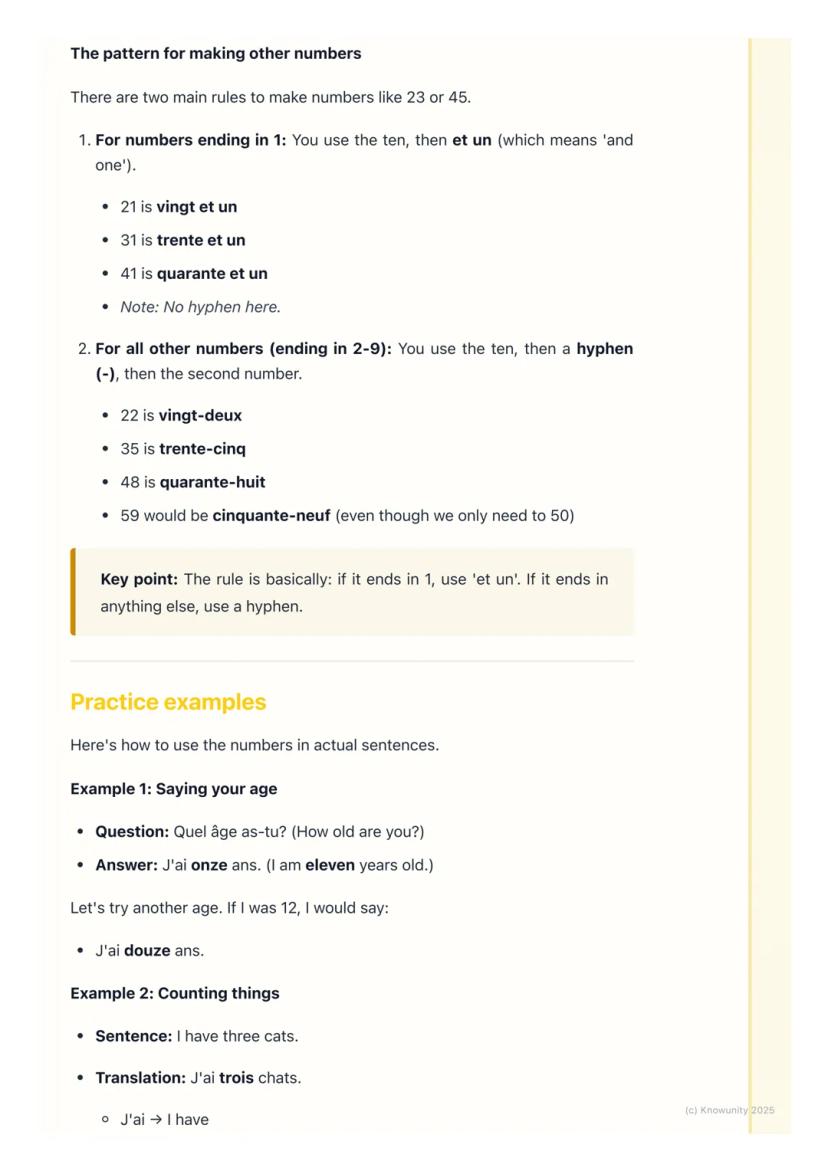
Right, this is the game-changer! There are only two rules you need to make any number up to 50, and they're dead simple once you get them.
Rule 1: Numbers ending in 1 use "et un" (meaning "and one"). So 21 becomes vingt et un, 31 becomes trente et un, and 41 becomes quarante et un. Notice there's no hyphen here - just the words flowing together.
Rule 2: All other numbers use a hyphen between the ten and the unit. So 22 is vingt-deux, 35 is trente-cinq, and 48 is quarante-huit. The hyphen keeps everything tidy!
Memory Trick: If it ends in 1, think "and one" (et un). If it ends in anything else, think "hyphen time"!
4
of 5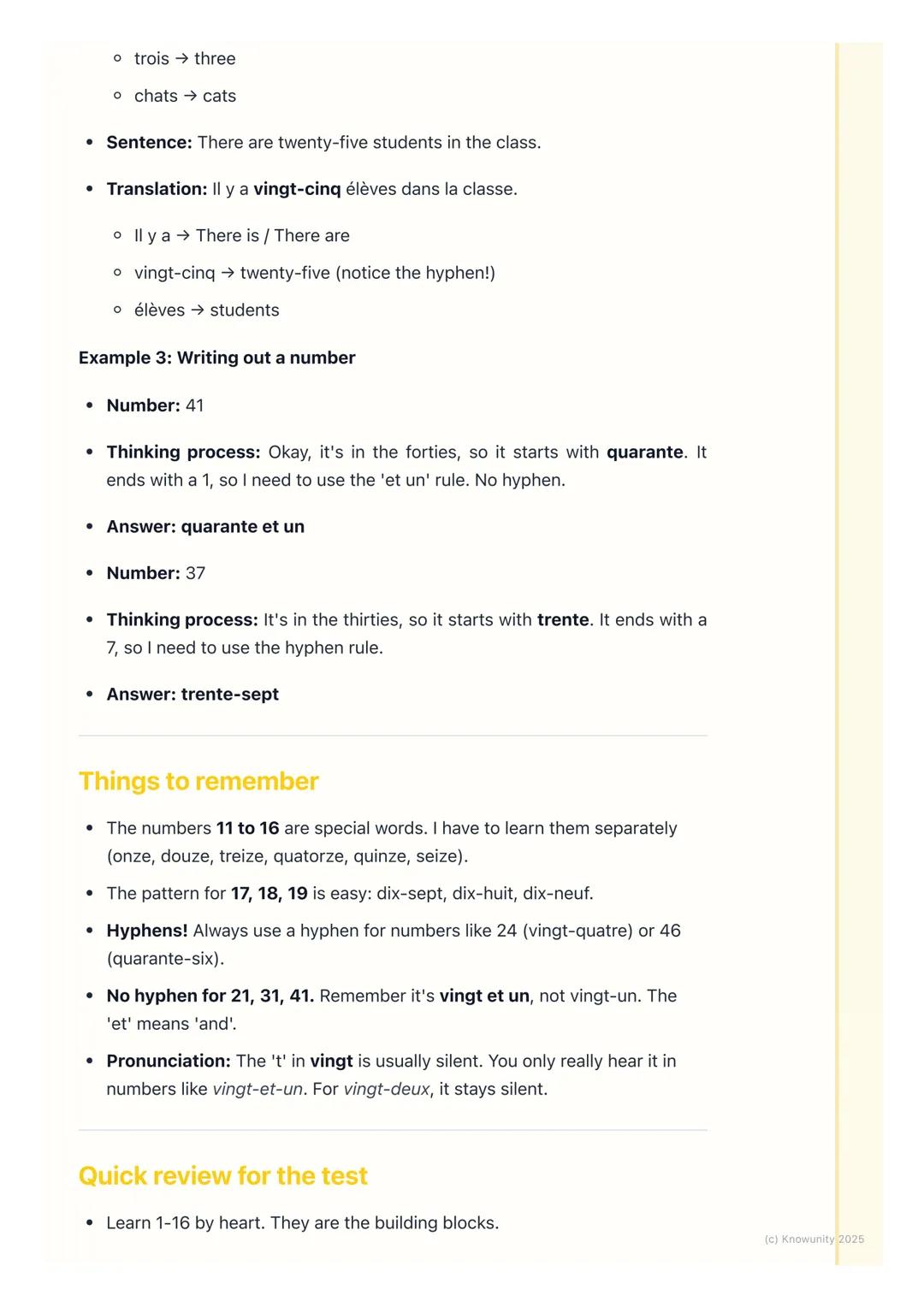
Using Numbers in Real French Sentences
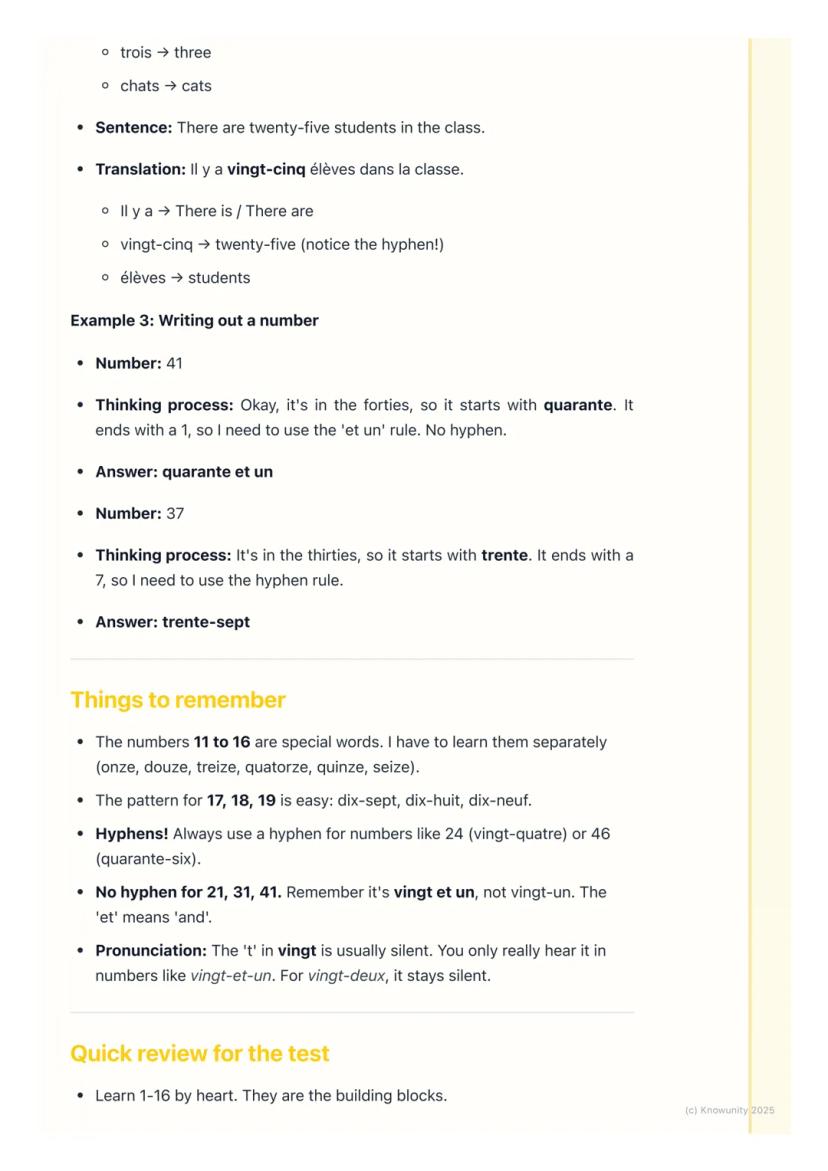
Time to put these numbers to work! Saying your age is probably the most useful thing you'll do with French numbers. The question "Quel âge as-tu?" means "How old are you?"
Your answer always starts with "J'ai" (I have) followed by the number and "ans" (years). So if you're 12, you'd say "J'ai douze ans." Easy!
Counting objects works similarly. "J'ai trois chats" means "I have three cats." For bigger groups, like "There are twenty-five students in the class," you'd say "Il y a vingt-cinq élèves dans la classe." Notice that hyphen in vingt-cinq!
When you're writing out numbers, just think through the process: Is it in the twenties, thirties, or forties? Does it end in 1 (use et un) or something else (use a hyphen)?
Practice Tip: Try saying your real age, your family members' ages, and count objects around your room. The more you use these numbers, the more automatic they become!
5
of 5
Quick Review and Test Prep
Master the foundation first: numbers 1-16 are your absolute essentials. If you know these cold, you can build everything else. The pattern for 17-19 is your bridge to the bigger numbers.
Don't forget the silent letters! The 't' in vingt is usually silent - it sounds like "van", not "vingt". This catches out loads of students in speaking tests.
Practice the two rules until they're automatic: "et un" for numbers ending in 1 (no hyphen), and hyphens for everything else. Try making random numbers like 23, 37, or 44 and see if you can write them out correctly.
The brilliant thing about French numbers is that once you've cracked this system up to 50, you've basically got the pattern for counting much higher too!
Final Check: Can you write your age in French? Can you count to 20 without looking? If yes, you're absolutely ready for that test!
Pensamos que nunca lo preguntarías...
¿Qué es Knowunity AI companion?
Nuestro compañero de IA está específicamente adaptado a las necesidades de los estudiantes. Basándonos en los millones de contenidos que tenemos en la plataforma, podemos dar a los estudiantes respuestas realmente significativas y relevantes. Pero no se trata solo de respuestas, el compañero también guía a los estudiantes a través de sus retos de aprendizaje diarios, con planes de aprendizaje personalizados, cuestionarios o contenidos en el chat y una personalización del 100% basada en las habilidades y el desarrollo de los estudiantes.
¿Dónde puedo descargar la app Knowunity?
Puedes descargar la app en Google Play Store y Apple App Store.
¿Knowunity es totalmente gratuito?
¡Sí lo es! Tienes acceso totalmente gratuito a todo el contenido de la app, puedes chatear con otros alumnos y recibir ayuda inmeditamente. Puedes ganar dinero utilizando la aplicación, que te permitirá acceder a determinadas funciones.
Contenidos más populares de French
2Contenidos más populares
9 Irish
IrishIrish oral questions and answers
Questions and answers for the leaving cert oral
5th Year4264
 English
Key Quotes : Sive
Key Quotes and explanations: Sive
6th Year2842
IrishIrish oral questions
Outline of oral questions
5th Year2055
IrishIníon- le hÁine Durkin
Aine Durkin’s poem, Iníon: Themes & summary
5th Year850
IrishIrish poetry 2027
Iníon + Dínit an Bhróin
5th Year1133
IrishLC HL notes- Iníon (poem)
Includes poem in English and Irish, theme, key words & phrases
5th Year2284
EnglishCultural Context : Shawshank Redemption : Sive : Small Things Like These
Comparative Study : Cultural Context : Shawshank Redemption, Sive and Small Things Like These
6th Year1430
IrishMo Ghrá-sa (Idir Lúibíní)
Notes on mo ghrá-sa
5th Year380
IrishAn Gaeilge Aiste
Irish Language essay
6th Year1320
¿No encuentras lo que buscas? Explora otros temas.
Mira lo que dicen nuestros usuarios. Les encantó — y a ti también te encantará.
4.6/5App Store
4.7/5Google Play
La app es muy fácil de usar y está muy bien diseñada. Hasta ahora he encontrado todo lo que estaba buscando y he podido aprender mucho de las presentaciones. Definitivamente utilizaré la aplicación para un examen de clase. Y, por supuesto, también me sirve mucho de inspiración.
Pablousuario de iOS
Esta app es realmente genial. Hay tantos apuntes de clase y ayuda [...]. Tengo problemas con matemáticas, por ejemplo, y la aplicación tiene muchas opciones de ayuda. Gracias a Knowunity, he mejorado en mates. Se la recomiendo a todo el mundo.
Elenausuaria de Android
Vaya, estoy realmente sorprendida. Acabo de probar la app porque la he visto anunciada muchas veces y me he quedado absolutamente alucinada. Esta app es LA AYUDA que quieres para el insti y, sobre todo, ofrece muchísimas cosas, como ejercicios y hojas informativas, que a mí personalmente me han sido MUY útiles.
Anausuaria de iOS
French10 visualizaciones·Actualizado Jun 12, 2026·5 páginasMaster French Numbers: Count from 1 to 50
Learning French numbers might seem tricky at first, but it's actually quite brilliant once you spot the patterns! You'll use these numbers constantly - for your age, buying things, or talking about your family - so getting them right is...
1
of 5
Inscríbete para ver los apuntes. ¡Es gratis!
- Acceso a todos los documentos
- Mejora tus notas
- Únete a millones de estudiantes
Getting Started with French Numbers 1-20
French numbers from 1-10 are completely unique words that you'll need to memorise properly. Think of them as your building blocks - once you've got these down, everything else becomes much easier!
The key ones to nail first are: un (1), deux (2), trois (3), quatre (4), cinq (5), six (6), sept (7), huit (8), neuf (9), and dix (10). Don't worry about perfect pronunciation yet - just get familiar with how they look.
Numbers 11-16 are special cases that you'll have to learn separately: onze, douze, treize, quatorze, quinze, seize. There's no pattern here, so it's just memorisation time!
Quick Tip: Practice writing out numbers 1-16 from memory. Once you can do this without looking, you're ready for the clever bit that comes next!
2
of 5Inscríbete para ver los apuntes. ¡Es gratis!
- Acceso a todos los documentos
- Mejora tus notas
- Únete a millones de estudiantes
The Clever Pattern from 17-20 and Beyond
Here's where French gets really smart! Numbers 17-19 follow a simple pattern: they're literally "ten-seven", "ten-eight", "ten-nine". So you get dix-sept (17), dix-huit (18), and dix-neuf (19). Brilliant, right?
Twenty is "vingt" - and watch out because the 'gt' at the end is silent! This trips up loads of people, so remember it sounds like "van", not "vingt".
Now you need to learn the tens: vingt (20), trente (30), quarante (40), and cinquante (50). These are your next building blocks for making bigger numbers.
Remember: The teens from 11-16 are weird, but 17-19 follow the "dix-" pattern. After that, it's all about combining tens with units!
3
of 5Inscríbete para ver los apuntes. ¡Es gratis!
- Acceso a todos los documentos
- Mejora tus notas
- Únete a millones de estudiantes
The Two Golden Rules for Making Numbers
Right, this is the game-changer! There are only two rules you need to make any number up to 50, and they're dead simple once you get them.
Rule 1: Numbers ending in 1 use "et un" (meaning "and one"). So 21 becomes vingt et un, 31 becomes trente et un, and 41 becomes quarante et un. Notice there's no hyphen here - just the words flowing together.
Rule 2: All other numbers use a hyphen between the ten and the unit. So 22 is vingt-deux, 35 is trente-cinq, and 48 is quarante-huit. The hyphen keeps everything tidy!
Memory Trick: If it ends in 1, think "and one" (et un). If it ends in anything else, think "hyphen time"!
4
of 5Inscríbete para ver los apuntes. ¡Es gratis!
- Acceso a todos los documentos
- Mejora tus notas
- Únete a millones de estudiantes
Using Numbers in Real French Sentences
Time to put these numbers to work! Saying your age is probably the most useful thing you'll do with French numbers. The question "Quel âge as-tu?" means "How old are you?"
Your answer always starts with "J'ai" (I have) followed by the number and "ans" (years). So if you're 12, you'd say "J'ai douze ans." Easy!
Counting objects works similarly. "J'ai trois chats" means "I have three cats." For bigger groups, like "There are twenty-five students in the class," you'd say "Il y a vingt-cinq élèves dans la classe." Notice that hyphen in vingt-cinq!
When you're writing out numbers, just think through the process: Is it in the twenties, thirties, or forties? Does it end in 1 (use et un) or something else (use a hyphen)?
Practice Tip: Try saying your real age, your family members' ages, and count objects around your room. The more you use these numbers, the more automatic they become!
5
of 5Inscríbete para ver los apuntes. ¡Es gratis!
- Acceso a todos los documentos
- Mejora tus notas
- Únete a millones de estudiantes
Quick Review and Test Prep
Master the foundation first: numbers 1-16 are your absolute essentials. If you know these cold, you can build everything else. The pattern for 17-19 is your bridge to the bigger numbers.
Don't forget the silent letters! The 't' in vingt is usually silent - it sounds like "van", not "vingt". This catches out loads of students in speaking tests.
Practice the two rules until they're automatic: "et un" for numbers ending in 1 (no hyphen), and hyphens for everything else. Try making random numbers like 23, 37, or 44 and see if you can write them out correctly.
The brilliant thing about French numbers is that once you've cracked this system up to 50, you've basically got the pattern for counting much higher too!
Final Check: Can you write your age in French? Can you count to 20 without looking? If yes, you're absolutely ready for that test!
Pensamos que nunca lo preguntarías...
¿Qué es Knowunity AI companion?
Nuestro compañero de IA está específicamente adaptado a las necesidades de los estudiantes. Basándonos en los millones de contenidos que tenemos en la plataforma, podemos dar a los estudiantes respuestas realmente significativas y relevantes. Pero no se trata solo de respuestas, el compañero también guía a los estudiantes a través de sus retos de aprendizaje diarios, con planes de aprendizaje personalizados, cuestionarios o contenidos en el chat y una personalización del 100% basada en las habilidades y el desarrollo de los estudiantes.
¿Dónde puedo descargar la app Knowunity?
Puedes descargar la app en Google Play Store y Apple App Store.
¿Knowunity es totalmente gratuito?
¡Sí lo es! Tienes acceso totalmente gratuito a todo el contenido de la app, puedes chatear con otros alumnos y recibir ayuda inmeditamente. Puedes ganar dinero utilizando la aplicación, que te permitirá acceder a determinadas funciones.
Contenidos más populares de French
2Contenidos más populares
9IrishIrish oral questions and answers
Questions and answers for the leaving cert oral
5th Year4264
EnglishKey Quotes : Sive
Key Quotes and explanations: Sive
6th Year2842
IrishIrish oral questions
Outline of oral questions
5th Year2055
IrishIníon- le hÁine Durkin
Aine Durkin’s poem, Iníon: Themes & summary
5th Year850
IrishIrish poetry 2027
Iníon + Dínit an Bhróin
5th Year1133
IrishLC HL notes- Iníon (poem)
Includes poem in English and Irish, theme, key words & phrases
5th Year2284
EnglishCultural Context : Shawshank Redemption : Sive : Small Things Like These
Comparative Study : Cultural Context : Shawshank Redemption, Sive and Small Things Like These
6th Year1430
IrishMo Ghrá-sa (Idir Lúibíní)
Notes on mo ghrá-sa
5th Year380
IrishAn Gaeilge Aiste
Irish Language essay
6th Year1320
¿No encuentras lo que buscas? Explora otros temas.
Mira lo que dicen nuestros usuarios. Les encantó — y a ti también te encantará.
4.6/5App Store
4.7/5Google Play
La app es muy fácil de usar y está muy bien diseñada. Hasta ahora he encontrado todo lo que estaba buscando y he podido aprender mucho de las presentaciones. Definitivamente utilizaré la aplicación para un examen de clase. Y, por supuesto, también me sirve mucho de inspiración.
Pablousuario de iOS
Esta app es realmente genial. Hay tantos apuntes de clase y ayuda [...]. Tengo problemas con matemáticas, por ejemplo, y la aplicación tiene muchas opciones de ayuda. Gracias a Knowunity, he mejorado en mates. Se la recomiendo a todo el mundo.
Elenausuaria de Android
Vaya, estoy realmente sorprendida. Acabo de probar la app porque la he visto anunciada muchas veces y me he quedado absolutamente alucinada. Esta app es LA AYUDA que quieres para el insti y, sobre todo, ofrece muchísimas cosas, como ejercicios y hojas informativas, que a mí personalmente me han sido MUY útiles.
Anausuaria de iOS