
Every day you're bombarded with information from TikTok, Instagram, WhatsApp...
 CSPE12 visualizaciones·Actualizado Jun 10, 2026·6 páginas
Uncovering Media Bias and Identifying Fake News
1 / 6
1
of 6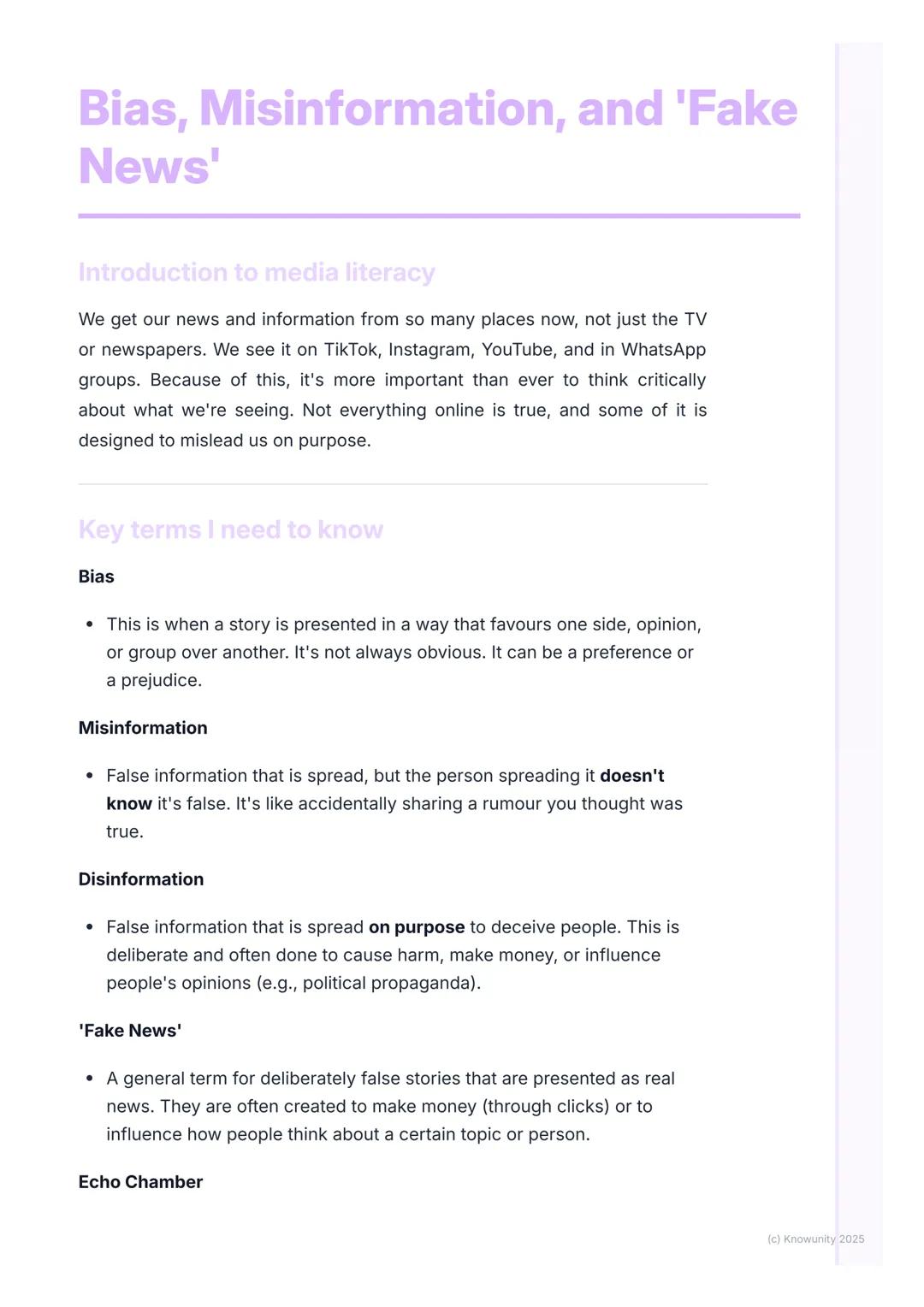
Understanding the Key Terms
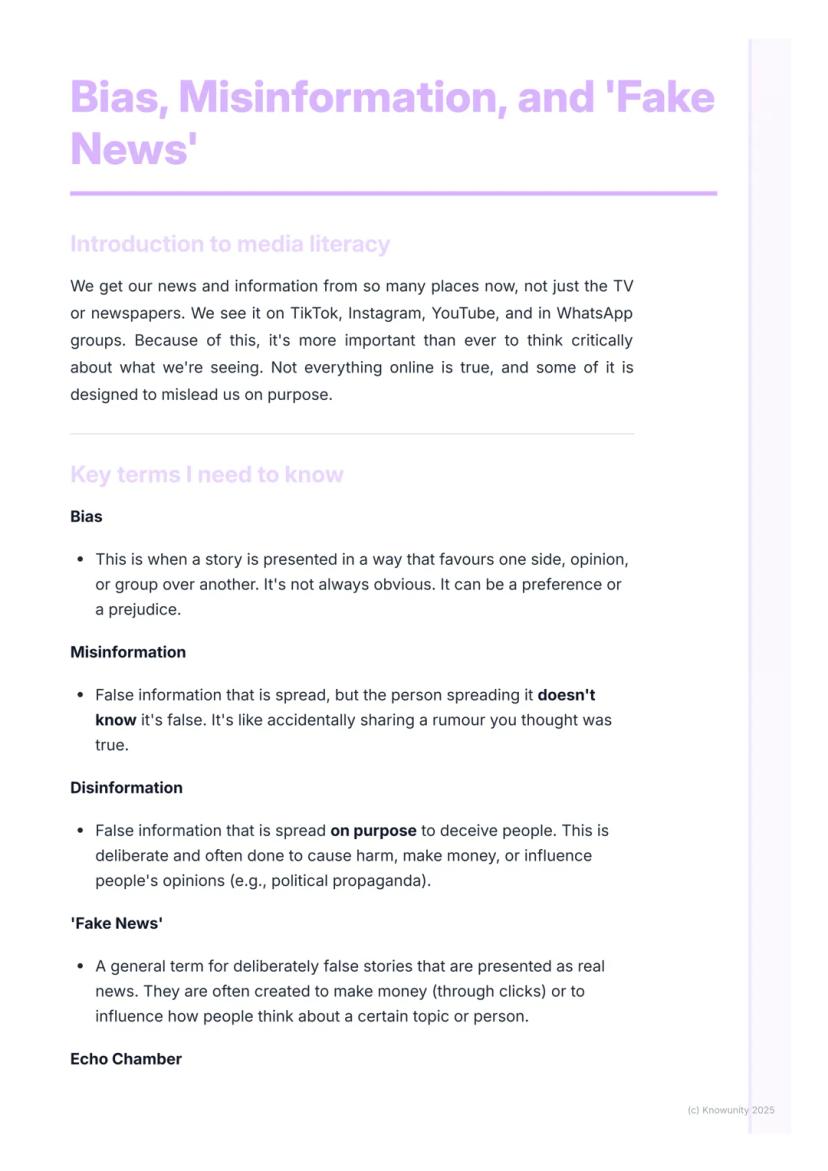
You're living in an age where misinformation spreads faster than wildfire on social media. Understanding these terms will help you become a savvy digital citizen who can't be easily fooled.
Bias happens when a story favours one side over another - it's like telling only half the story. Misinformation is false information spread accidentally (like sharing a rumour you thought was true), while disinformation is deliberately false information designed to deceive you.
'Fake news' refers to completely made-up stories presented as real news, often created to make money through clicks or influence your opinions. The scary part? It's designed to look completely legitimate.
💡 Remember: Not everyone spreading false information is doing it on purpose - sometimes people genuinely believe what they're sharing is true.
2
of 6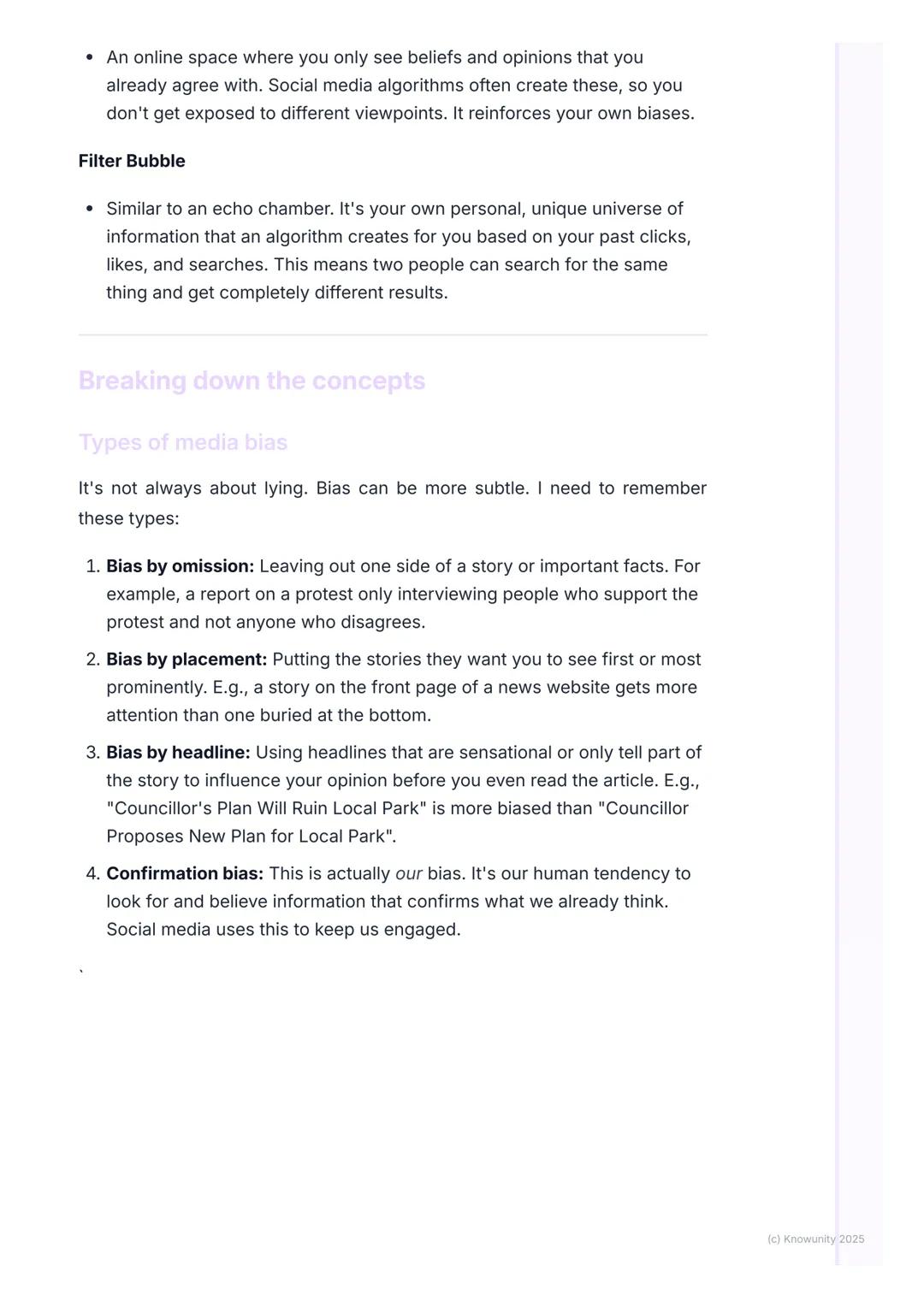
How Social Media Tricks Your Brain
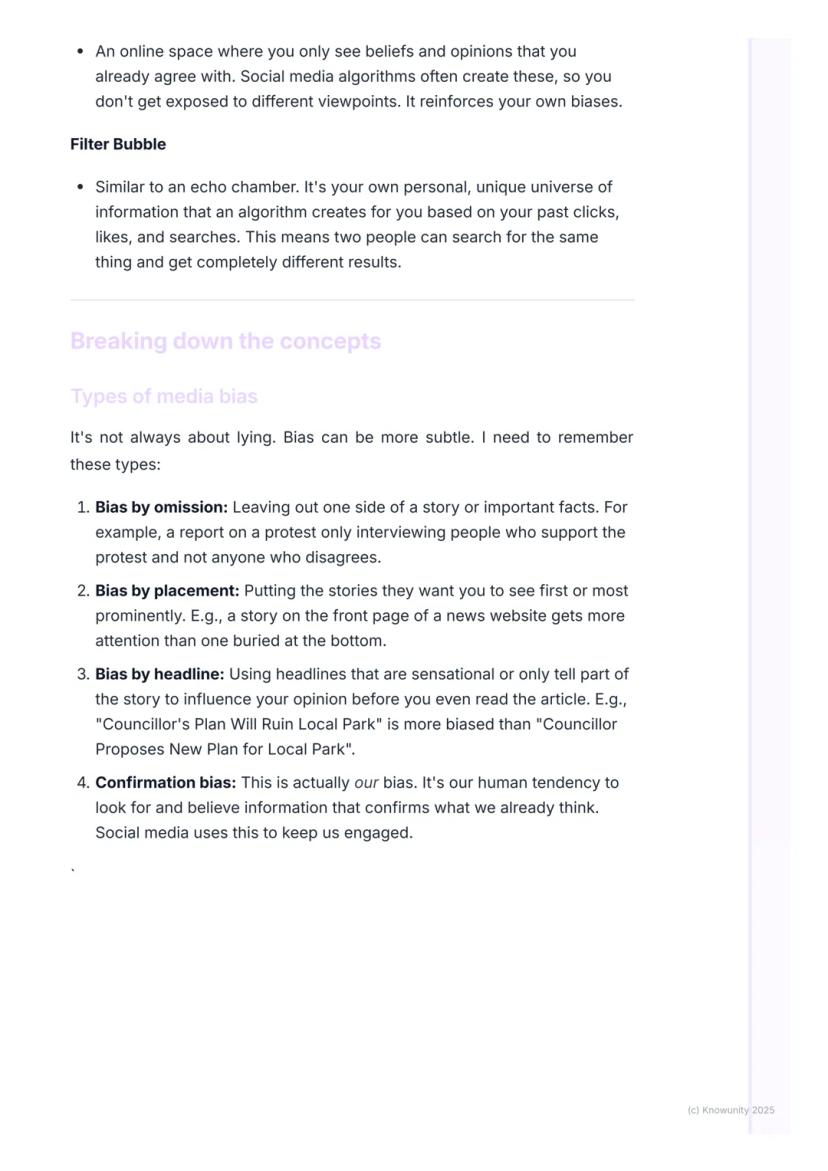
Social media algorithms create echo chambers and filter bubbles that only show you content you already agree with. This means you and your mate could search for the same topic and get completely different results.
There are four sneaky types of media bias to watch for. Bias by omission leaves out important facts, whilst bias by placement puts certain stories front and centre. Bias by headline uses sensational titles to influence you before you even read the article.
The trickiest one is confirmation bias - that's your own brain seeking information that confirms what you already believe. Social media companies use this to keep you scrolling and engaged.
💡 Think about it: When did you last see a post on your feed that completely disagreed with your views? If you can't remember, you're probably in a filter bubble.
3
of 6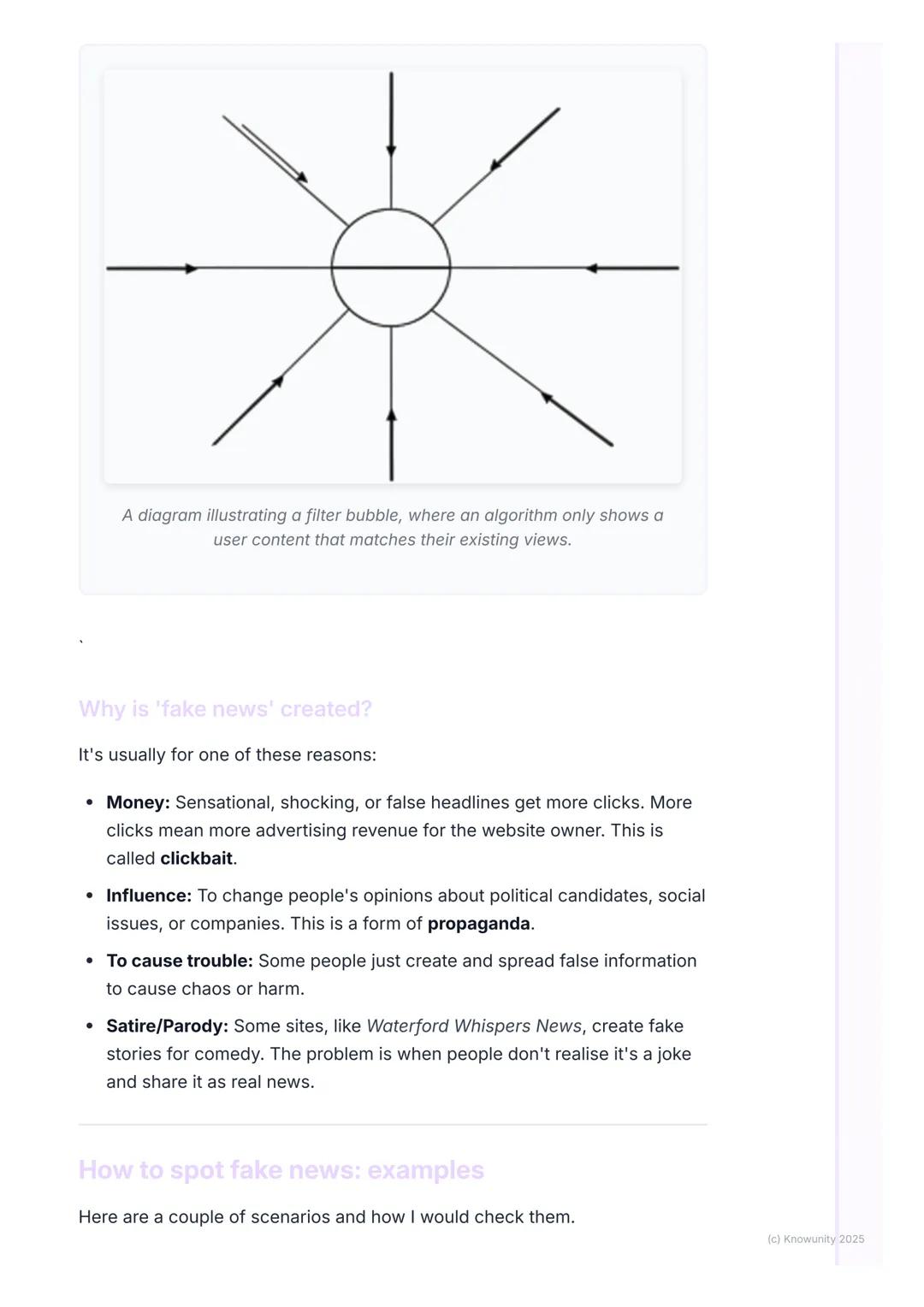
Why People Create Fake News
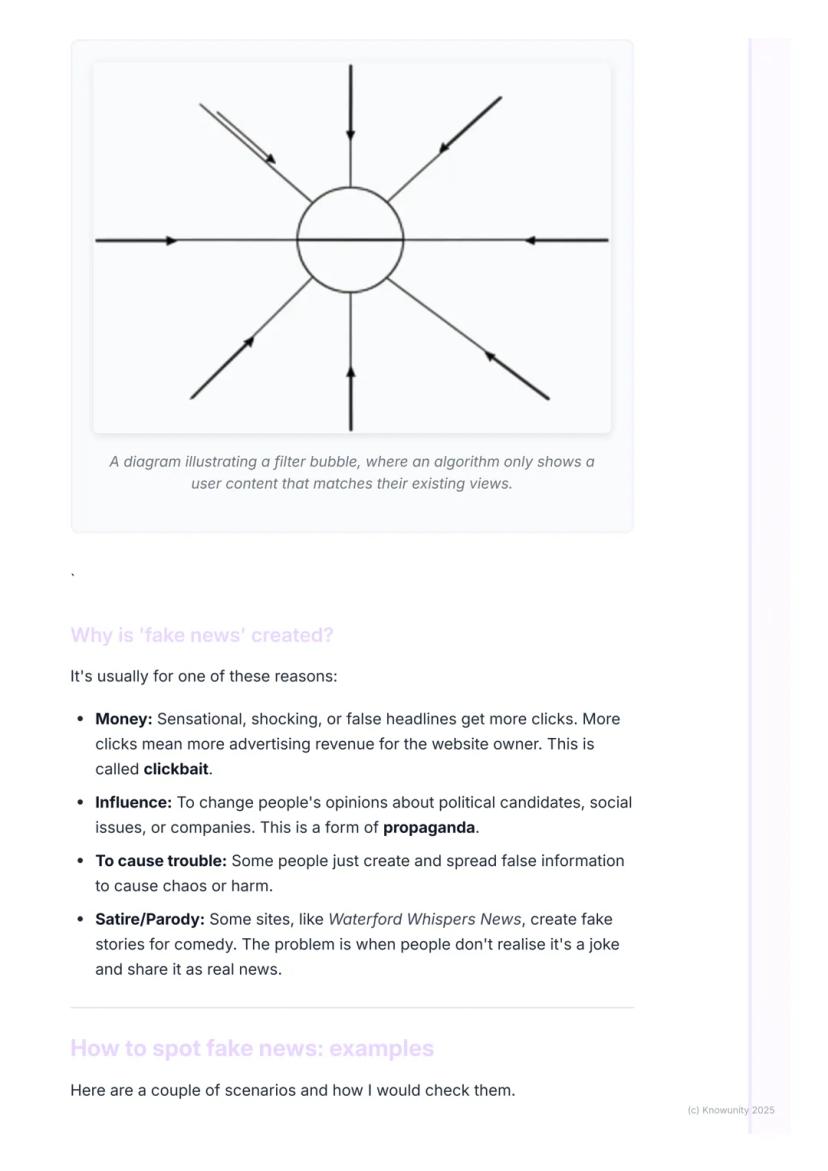
Understanding the motives behind fake news helps you spot it more easily. Money is often the biggest driver - shocking headlines get more clicks, and more clicks mean more advertising revenue through clickbait.
Political influence is another major reason. Propaganda disguised as news can change how you vote or what you think about important issues. Some people create false information just to cause chaos or harm.
Sometimes it's meant to be funny - sites like Waterford Whispers News create fake stories for comedy. The problem comes when people don't realise it's satire and share it as real news.
💡 Quick tip: If a headline makes you feel extremely angry, scared, or excited, that's often a red flag that someone's trying to manipulate your emotions.
4
of 6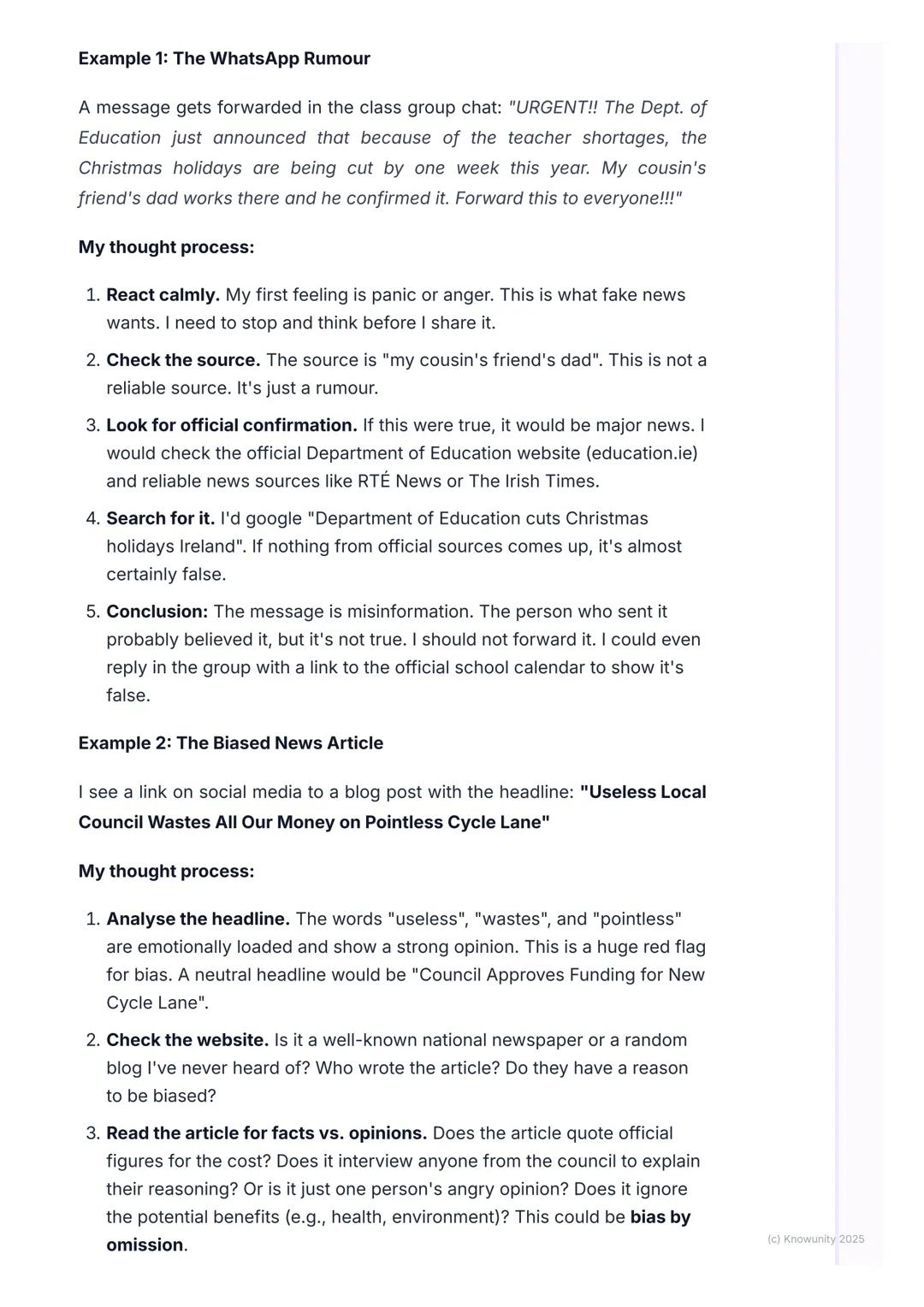
Real-World Examples You'll Recognise
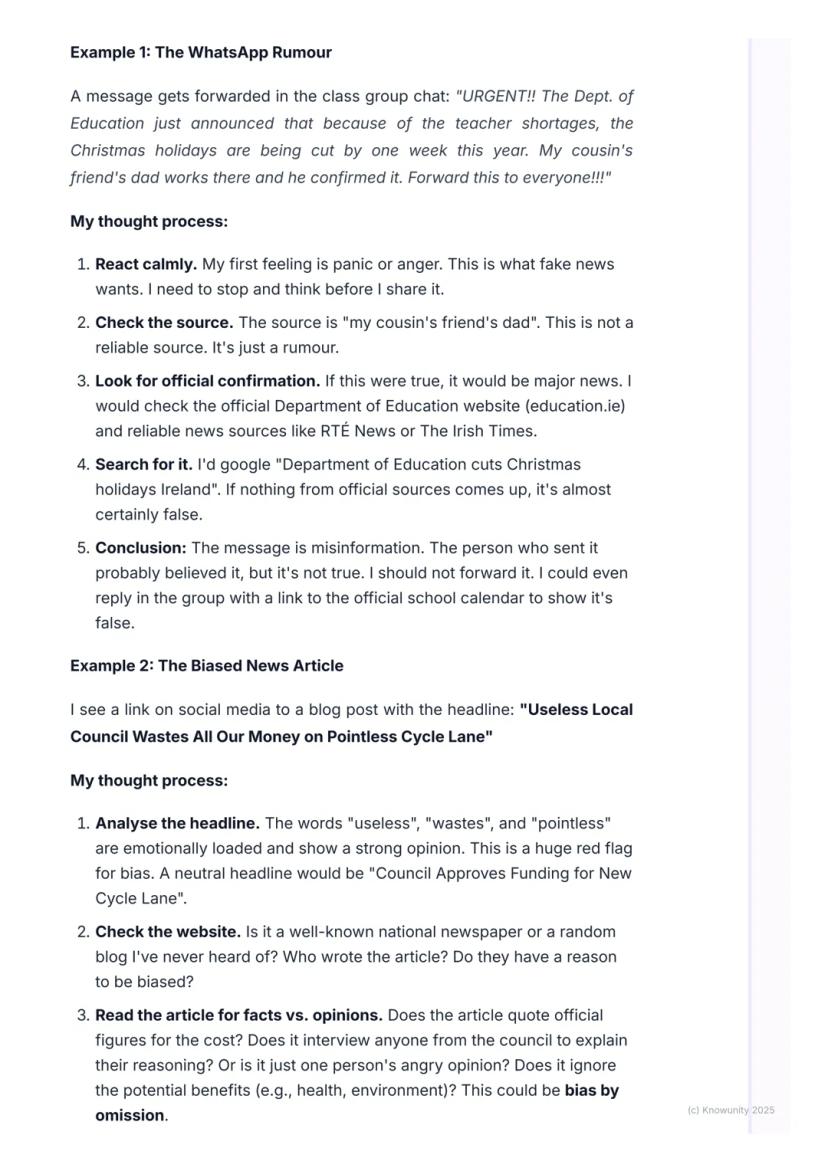
Picture this: a WhatsApp message in your class group claims the Department of Education is cutting Christmas holidays. Your first instinct might be panic, but that's exactly what misinformation wants.
Instead of immediately forwarding it, check the source ("my cousin's friend's dad" isn't reliable). Look for official confirmation on education.ie or RTÉ News. If it's not there, it's almost certainly false.
Biased news articles are trickier to spot. Headlines like "Useless Council Wastes Money on Pointless Cycle Lane" use emotionally loaded words that show clear bias. A neutral headline would simply state "Council Approves Funding for New Cycle Lane."
Always read beyond the headline and check if the article includes different perspectives or just pushes one angry viewpoint.
💡 Pro tip: If you can't find the same story on multiple reliable news sources, be very suspicious of its accuracy.
5
of 6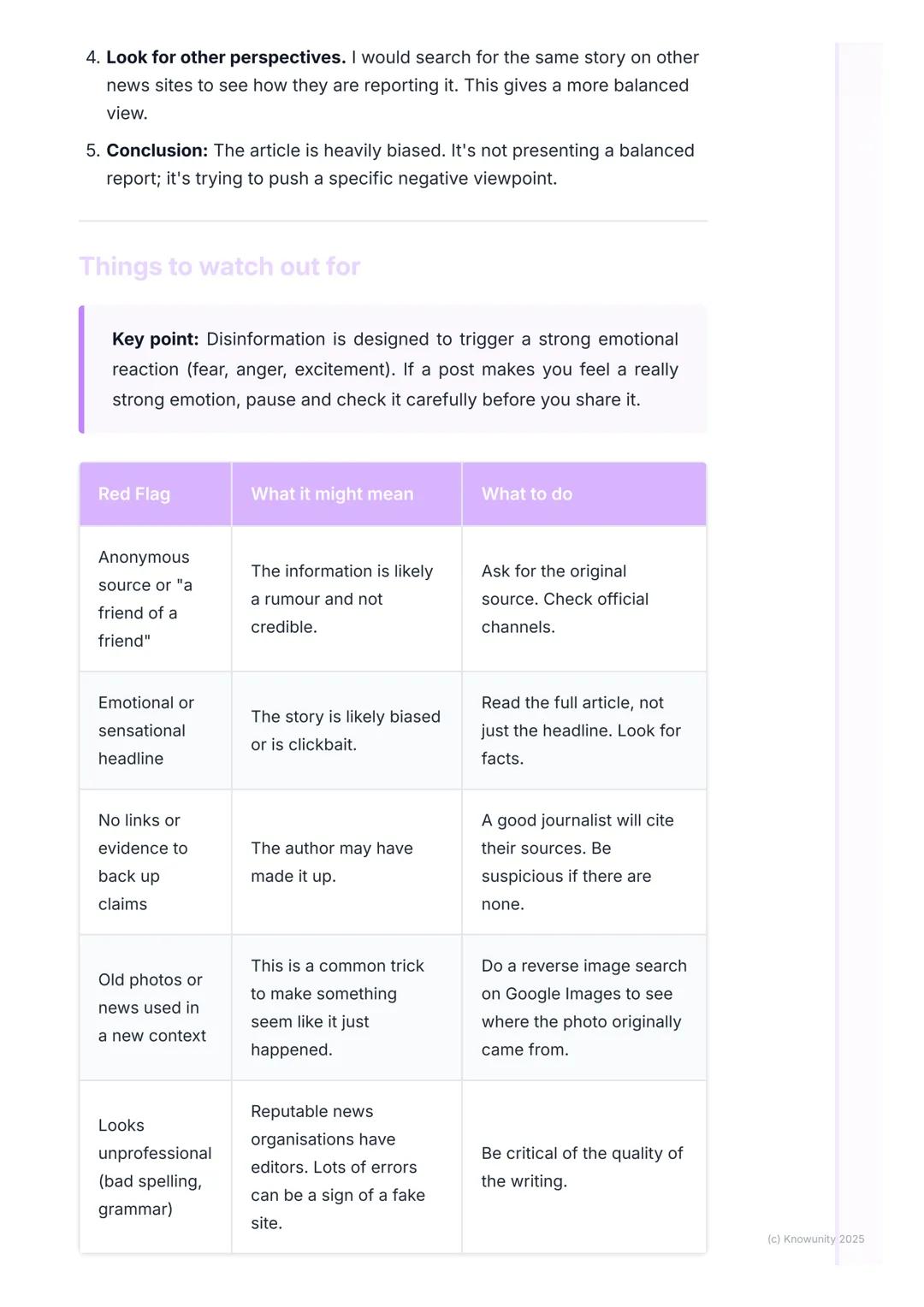
Red Flags That Scream 'Fake News'
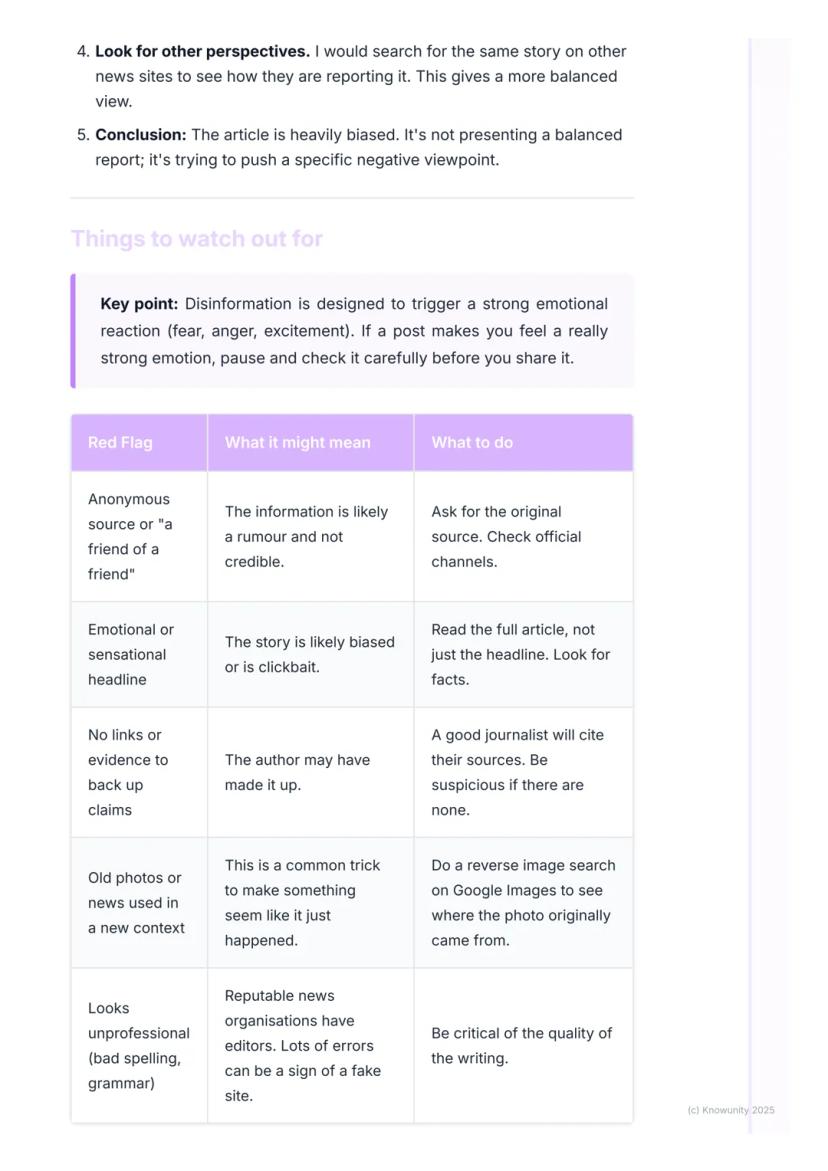
Certain warning signs should make you pause before believing or sharing content. Anonymous sources or "a friend of a friend" claims are massive red flags - reliable journalism names its sources.
Emotional, sensational headlines are designed to trigger strong reactions and get clicks. Poor spelling and grammar often indicate unprofessional, unreliable sources since legitimate news organisations have editors.
Reverse image searches on Google can reveal if old photos are being used out of context to make fake stories seem current. This is a common trick used to make disinformation appear fresh and urgent.
💡 Remember: If something triggers a really strong emotional reaction, that's your cue to fact-check it before sharing.
| Red Flag | What to Do |
|---|---|
| Anonymous sources | Check official channels |
| Emotional headlines | Read the full article |
| No evidence cited | Look for credible sources |
| Poor quality writing | Question the source's credibility |
6
of 6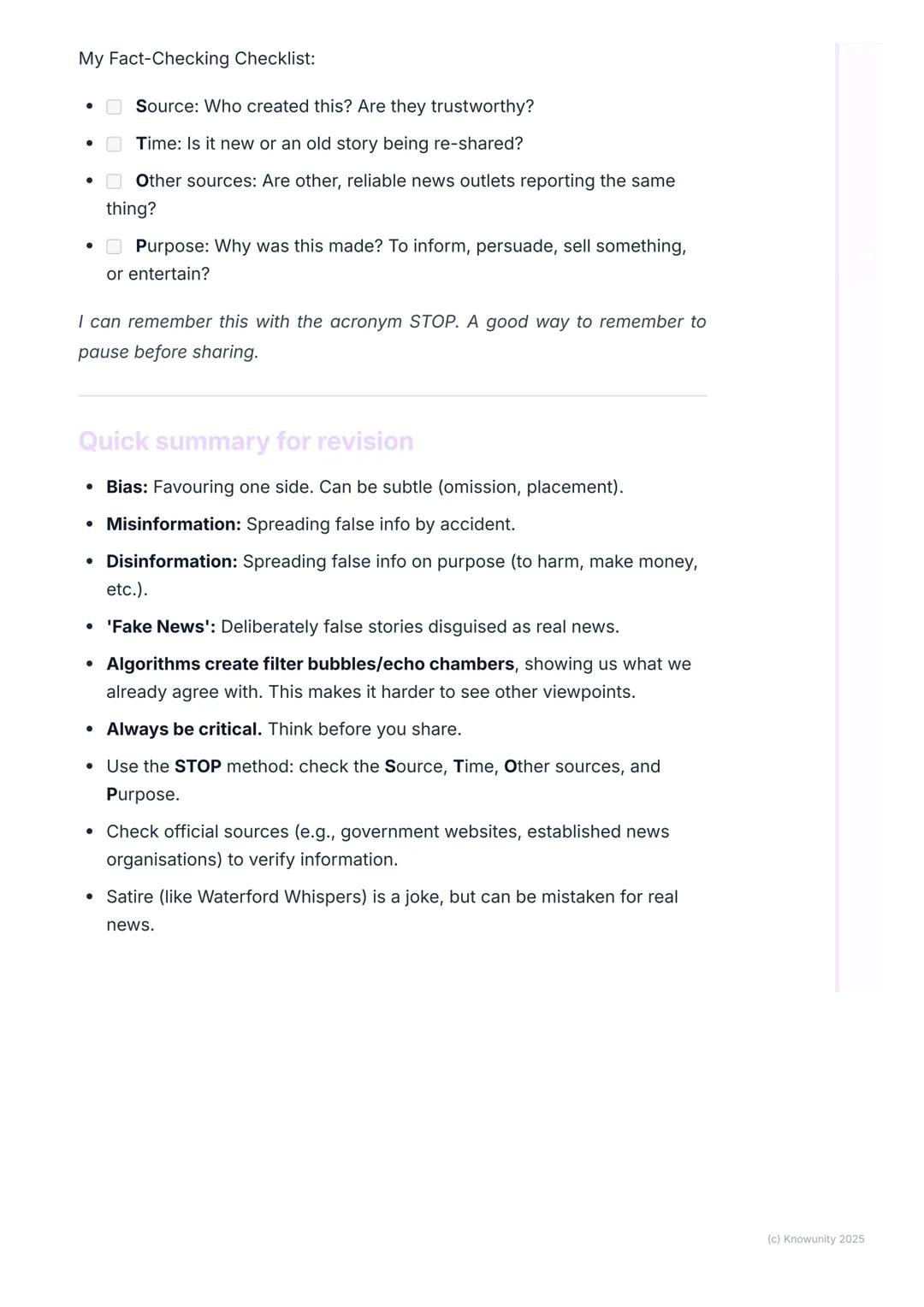
Your Fact-Checking Toolkit
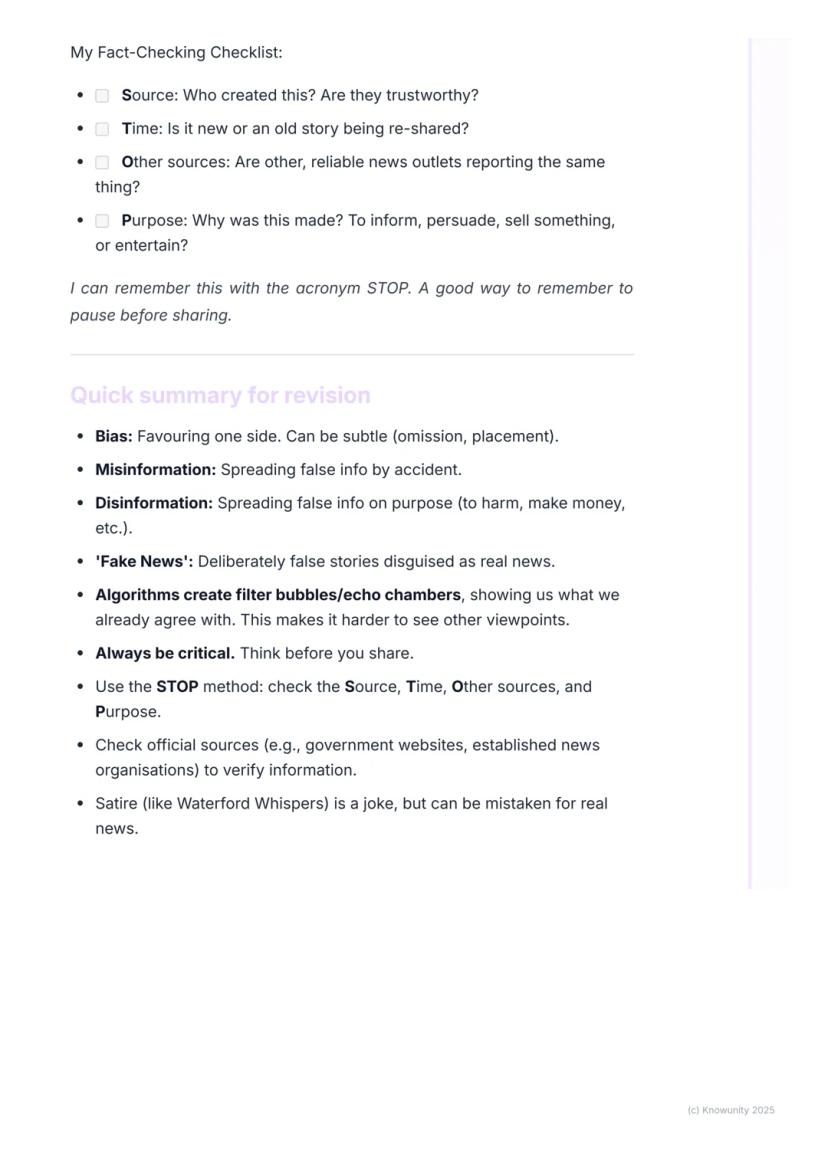
The STOP method is your best friend: check the Source, Time, Other sources, and Purpose before sharing anything. This simple acronym can save you from spreading misinformation.
Always verify information through official sources like government websites or established news organisations. Don't rely on social media posts or random blogs for important news.
Remember that developing these media literacy skills takes practice, but you're perfectly capable of becoming an expert fact-checker. Start small - question one post a day and gradually build your critical thinking muscles.
Being media literate doesn't mean being paranoid about everything you see online. It means being smart, critical, and responsible with the information you consume and share.
💡 Your superpower: Critical thinking is one of the most valuable skills you can develop - it'll serve you well beyond school and into your future career and life decisions.
Pensamos que nunca lo preguntarías...
¿Qué es Knowunity AI companion?
Nuestro compañero de IA está específicamente adaptado a las necesidades de los estudiantes. Basándonos en los millones de contenidos que tenemos en la plataforma, podemos dar a los estudiantes respuestas realmente significativas y relevantes. Pero no se trata solo de respuestas, el compañero también guía a los estudiantes a través de sus retos de aprendizaje diarios, con planes de aprendizaje personalizados, cuestionarios o contenidos en el chat y una personalización del 100% basada en las habilidades y el desarrollo de los estudiantes.
¿Dónde puedo descargar la app Knowunity?
Puedes descargar la app en Google Play Store y Apple App Store.
¿Knowunity es totalmente gratuito?
¡Sí lo es! Tienes acceso totalmente gratuito a todo el contenido de la app, puedes chatear con otros alumnos y recibir ayuda inmeditamente. Puedes ganar dinero utilizando la aplicación, que te permitirá acceder a determinadas funciones.
Contenidos más populares
9 Irish
IrishIrish oral questions and answers
Questions and answers for the leaving cert oral
5th Year4264
 English
Key Quotes : Sive
Key Quotes and explanations: Sive
6th Year2842
IrishIrish oral questions
Outline of oral questions
5th Year2055
IrishIníon- le hÁine Durkin
Aine Durkin’s poem, Iníon: Themes & summary
5th Year890
IrishIrish poetry 2027
Iníon + Dínit an Bhróin
5th Year1153
IrishLC HL notes- Iníon (poem)
Includes poem in English and Irish, theme, key words & phrases
5th Year2304
EnglishCultural Context : Shawshank Redemption : Sive : Small Things Like These
Comparative Study : Cultural Context : Shawshank Redemption, Sive and Small Things Like These
6th Year1430
IrishMo Ghrá-sa (Idir Lúibíní)
Notes on mo ghrá-sa
5th Year380
IrishAn Gaeilge Aiste
Irish Language essay
6th Year1320
¿No encuentras lo que buscas? Explora otros temas.
Mira lo que dicen nuestros usuarios. Les encantó — y a ti también te encantará.
4.6/5App Store
4.7/5Google Play
La app es muy fácil de usar y está muy bien diseñada. Hasta ahora he encontrado todo lo que estaba buscando y he podido aprender mucho de las presentaciones. Definitivamente utilizaré la aplicación para un examen de clase. Y, por supuesto, también me sirve mucho de inspiración.
Pablousuario de iOS
Esta app es realmente genial. Hay tantos apuntes de clase y ayuda [...]. Tengo problemas con matemáticas, por ejemplo, y la aplicación tiene muchas opciones de ayuda. Gracias a Knowunity, he mejorado en mates. Se la recomiendo a todo el mundo.
Elenausuaria de Android
Vaya, estoy realmente sorprendida. Acabo de probar la app porque la he visto anunciada muchas veces y me he quedado absolutamente alucinada. Esta app es LA AYUDA que quieres para el insti y, sobre todo, ofrece muchísimas cosas, como ejercicios y hojas informativas, que a mí personalmente me han sido MUY útiles.
Anausuaria de iOS
CSPE12 visualizaciones·Actualizado Jun 10, 2026·6 páginasUncovering Media Bias and Identifying Fake News
Every day you're bombarded with information from TikTok, Instagram, WhatsApp groups, and news sites - but how do you know what's actually true? Learning to spot bias, misinformation, and fake news isn't just a school skill; it's essential for navigating...
1
of 6
Inscríbete para ver los apuntes. ¡Es gratis!
- Acceso a todos los documentos
- Mejora tus notas
- Únete a millones de estudiantes
Understanding the Key Terms
You're living in an age where misinformation spreads faster than wildfire on social media. Understanding these terms will help you become a savvy digital citizen who can't be easily fooled.
Bias happens when a story favours one side over another - it's like telling only half the story. Misinformation is false information spread accidentally (like sharing a rumour you thought was true), while disinformation is deliberately false information designed to deceive you.
'Fake news' refers to completely made-up stories presented as real news, often created to make money through clicks or influence your opinions. The scary part? It's designed to look completely legitimate.
💡 Remember: Not everyone spreading false information is doing it on purpose - sometimes people genuinely believe what they're sharing is true.
2
of 6Inscríbete para ver los apuntes. ¡Es gratis!
- Acceso a todos los documentos
- Mejora tus notas
- Únete a millones de estudiantes
How Social Media Tricks Your Brain
Social media algorithms create echo chambers and filter bubbles that only show you content you already agree with. This means you and your mate could search for the same topic and get completely different results.
There are four sneaky types of media bias to watch for. Bias by omission leaves out important facts, whilst bias by placement puts certain stories front and centre. Bias by headline uses sensational titles to influence you before you even read the article.
The trickiest one is confirmation bias - that's your own brain seeking information that confirms what you already believe. Social media companies use this to keep you scrolling and engaged.
💡 Think about it: When did you last see a post on your feed that completely disagreed with your views? If you can't remember, you're probably in a filter bubble.
3
of 6Inscríbete para ver los apuntes. ¡Es gratis!
- Acceso a todos los documentos
- Mejora tus notas
- Únete a millones de estudiantes
Why People Create Fake News
Understanding the motives behind fake news helps you spot it more easily. Money is often the biggest driver - shocking headlines get more clicks, and more clicks mean more advertising revenue through clickbait.
Political influence is another major reason. Propaganda disguised as news can change how you vote or what you think about important issues. Some people create false information just to cause chaos or harm.
Sometimes it's meant to be funny - sites like Waterford Whispers News create fake stories for comedy. The problem comes when people don't realise it's satire and share it as real news.
💡 Quick tip: If a headline makes you feel extremely angry, scared, or excited, that's often a red flag that someone's trying to manipulate your emotions.
4
of 6Inscríbete para ver los apuntes. ¡Es gratis!
- Acceso a todos los documentos
- Mejora tus notas
- Únete a millones de estudiantes
Real-World Examples You'll Recognise
Picture this: a WhatsApp message in your class group claims the Department of Education is cutting Christmas holidays. Your first instinct might be panic, but that's exactly what misinformation wants.
Instead of immediately forwarding it, check the source ("my cousin's friend's dad" isn't reliable). Look for official confirmation on education.ie or RTÉ News. If it's not there, it's almost certainly false.
Biased news articles are trickier to spot. Headlines like "Useless Council Wastes Money on Pointless Cycle Lane" use emotionally loaded words that show clear bias. A neutral headline would simply state "Council Approves Funding for New Cycle Lane."
Always read beyond the headline and check if the article includes different perspectives or just pushes one angry viewpoint.
💡 Pro tip: If you can't find the same story on multiple reliable news sources, be very suspicious of its accuracy.
5
of 6Inscríbete para ver los apuntes. ¡Es gratis!
- Acceso a todos los documentos
- Mejora tus notas
- Únete a millones de estudiantes
Red Flags That Scream 'Fake News'
Certain warning signs should make you pause before believing or sharing content. Anonymous sources or "a friend of a friend" claims are massive red flags - reliable journalism names its sources.
Emotional, sensational headlines are designed to trigger strong reactions and get clicks. Poor spelling and grammar often indicate unprofessional, unreliable sources since legitimate news organisations have editors.
Reverse image searches on Google can reveal if old photos are being used out of context to make fake stories seem current. This is a common trick used to make disinformation appear fresh and urgent.
💡 Remember: If something triggers a really strong emotional reaction, that's your cue to fact-check it before sharing.
| Red Flag | What to Do |
|---|---|
| Anonymous sources | Check official channels |
| Emotional headlines | Read the full article |
| No evidence cited | Look for credible sources |
| Poor quality writing | Question the source's credibility |
6
of 6Inscríbete para ver los apuntes. ¡Es gratis!
- Acceso a todos los documentos
- Mejora tus notas
- Únete a millones de estudiantes
Your Fact-Checking Toolkit
The STOP method is your best friend: check the Source, Time, Other sources, and Purpose before sharing anything. This simple acronym can save you from spreading misinformation.
Always verify information through official sources like government websites or established news organisations. Don't rely on social media posts or random blogs for important news.
Remember that developing these media literacy skills takes practice, but you're perfectly capable of becoming an expert fact-checker. Start small - question one post a day and gradually build your critical thinking muscles.
Being media literate doesn't mean being paranoid about everything you see online. It means being smart, critical, and responsible with the information you consume and share.
💡 Your superpower: Critical thinking is one of the most valuable skills you can develop - it'll serve you well beyond school and into your future career and life decisions.
Pensamos que nunca lo preguntarías...
¿Qué es Knowunity AI companion?
Nuestro compañero de IA está específicamente adaptado a las necesidades de los estudiantes. Basándonos en los millones de contenidos que tenemos en la plataforma, podemos dar a los estudiantes respuestas realmente significativas y relevantes. Pero no se trata solo de respuestas, el compañero también guía a los estudiantes a través de sus retos de aprendizaje diarios, con planes de aprendizaje personalizados, cuestionarios o contenidos en el chat y una personalización del 100% basada en las habilidades y el desarrollo de los estudiantes.
¿Dónde puedo descargar la app Knowunity?
Puedes descargar la app en Google Play Store y Apple App Store.
¿Knowunity es totalmente gratuito?
¡Sí lo es! Tienes acceso totalmente gratuito a todo el contenido de la app, puedes chatear con otros alumnos y recibir ayuda inmeditamente. Puedes ganar dinero utilizando la aplicación, que te permitirá acceder a determinadas funciones.
Contenidos más populares
9IrishIrish oral questions and answers
Questions and answers for the leaving cert oral
5th Year4264
EnglishKey Quotes : Sive
Key Quotes and explanations: Sive
6th Year2842
IrishIrish oral questions
Outline of oral questions
5th Year2055
IrishIníon- le hÁine Durkin
Aine Durkin’s poem, Iníon: Themes & summary
5th Year890
IrishIrish poetry 2027
Iníon + Dínit an Bhróin
5th Year1153
IrishLC HL notes- Iníon (poem)
Includes poem in English and Irish, theme, key words & phrases
5th Year2304
EnglishCultural Context : Shawshank Redemption : Sive : Small Things Like These
Comparative Study : Cultural Context : Shawshank Redemption, Sive and Small Things Like These
6th Year1430
IrishMo Ghrá-sa (Idir Lúibíní)
Notes on mo ghrá-sa
5th Year380
IrishAn Gaeilge Aiste
Irish Language essay
6th Year1320
¿No encuentras lo que buscas? Explora otros temas.
Mira lo que dicen nuestros usuarios. Les encantó — y a ti también te encantará.
4.6/5App Store
4.7/5Google Play
La app es muy fácil de usar y está muy bien diseñada. Hasta ahora he encontrado todo lo que estaba buscando y he podido aprender mucho de las presentaciones. Definitivamente utilizaré la aplicación para un examen de clase. Y, por supuesto, también me sirve mucho de inspiración.
Pablousuario de iOS
Esta app es realmente genial. Hay tantos apuntes de clase y ayuda [...]. Tengo problemas con matemáticas, por ejemplo, y la aplicación tiene muchas opciones de ayuda. Gracias a Knowunity, he mejorado en mates. Se la recomiendo a todo el mundo.
Elenausuaria de Android
Vaya, estoy realmente sorprendida. Acabo de probar la app porque la he visto anunciada muchas veces y me he quedado absolutamente alucinada. Esta app es LA AYUDA que quieres para el insti y, sobre todo, ofrece muchísimas cosas, como ejercicios y hojas informativas, que a mí personalmente me han sido MUY útiles.
Anausuaria de iOS