
Fungi are everywhere around you - from the mushrooms on...
 Biology5 visualizaciones·Actualizado Jun 10, 2026·7 páginas
Understanding Fungi: Characteristics and Importance
1 / 7
1
of 7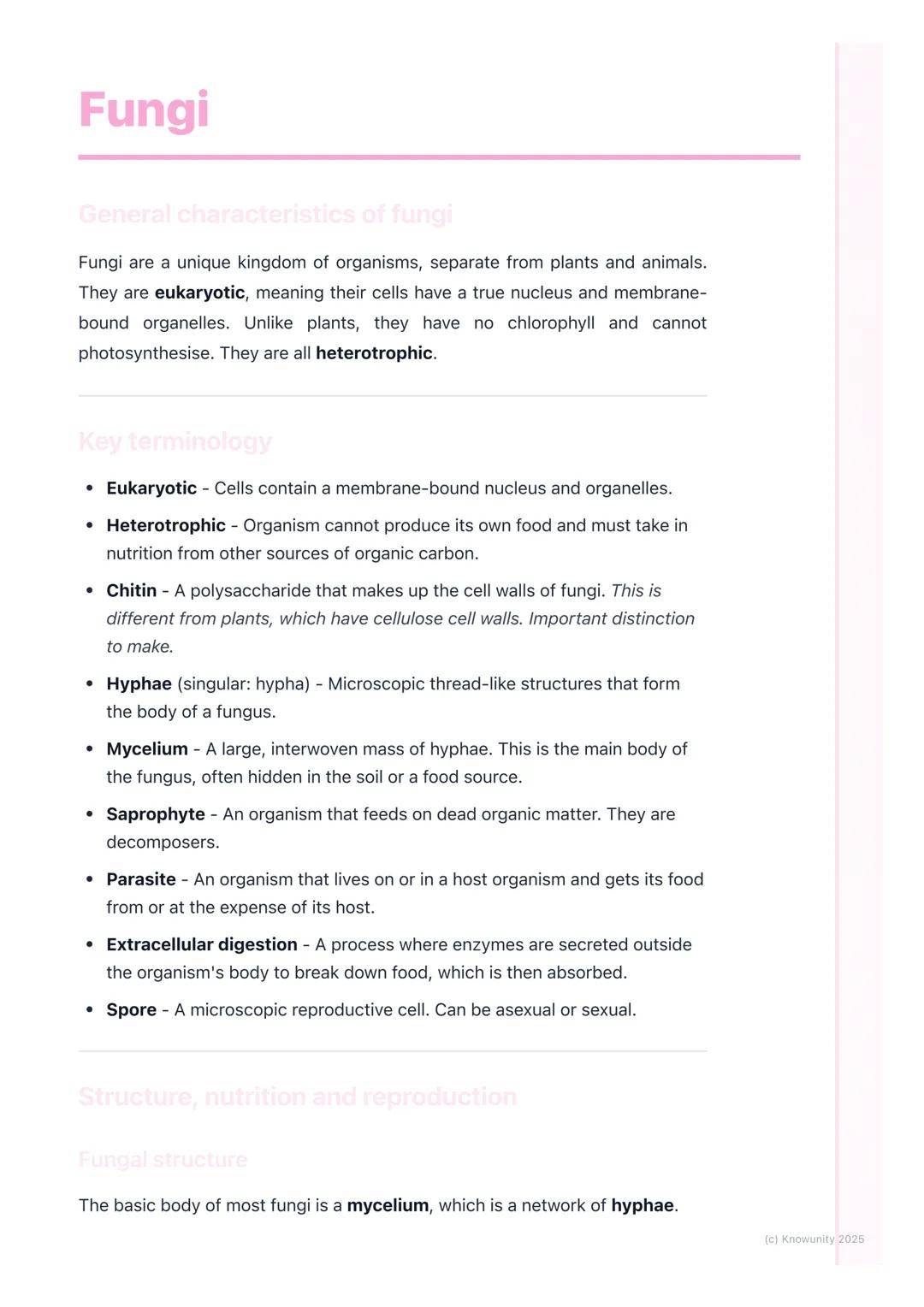
What Makes Fungi Special?
Think of fungi as nature's recyclers with a twist - they're eukaryotic organisms that can't make their own food like plants do. Instead, they're heterotrophic, meaning they need to get their nutrients from other sources.
Here's what sets them apart: their cell walls are made of chitin (the same stuff in insect shells), not cellulose like plants. Most fungi are built from microscopic threads called hyphae, which weave together to form a network called a mycelium - basically the main body of the fungus that's often hidden underground.
The key terms you need to know include saprophytes (decomposers that feed on dead stuff), parasites (fungi that harm their hosts), and extracellular digestion (they secrete enzymes outside their body to break down food before absorbing it).
Remember: Fungi store food as glycogen, just like animals do, not starch like plants!
2
of 7
Fungal Structure and How They Feed
Fungi come in two main structural types. Aseptate hyphae (like in Rhizopus) are basically long tubes with many nuclei floating around - no dividing walls. Septate hyphae have cross-walls with pores that let stuff move between compartments.
Saprophytic nutrition is how most fungi survive - they're the ultimate decomposers. The mycelium spreads over dead organic matter, secretes digestive enzymes, breaks everything down into simple molecules, then absorbs the nutrients. This process is crucial for recycling nutrients in ecosystems.
Some fungi are parasites that harm living hosts (think athlete's foot), whilst others form beneficial partnerships. Lichens are fungi teamed up with algae, and mycorrhizae are fungi living with plant roots - both organisms benefit from these relationships.
Key Point: Yeast is the odd one out - it's unicellular and doesn't form a mycelium at all!
3
of 7
How Fungi Reproduce
Fungi are pretty clever when it comes to reproduction - they've got options! Asexual reproduction is the quick and easy method when conditions are good. Most fungi produce loads of lightweight spores in structures called sporangia, which get dispersed by wind or water.
Yeast does things differently - it reproduces by budding. A small bud forms on the parent cell, gets a copy of the nucleus through mitosis, grows, and eventually breaks off to live independently.
Sexual reproduction kicks in when times get tough. Two different mating strains come together, their nuclei fuse to create a zygospore with a tough outer wall that can survive harsh conditions. When things improve, the zygospore undergoes meiosis to produce new spores with genetic variation.
Exam Tip: Remember that sexual reproduction in fungi introduces genetic variation and helps them survive adverse conditions!
4
of 7
Rhizopus - The Bread Mould
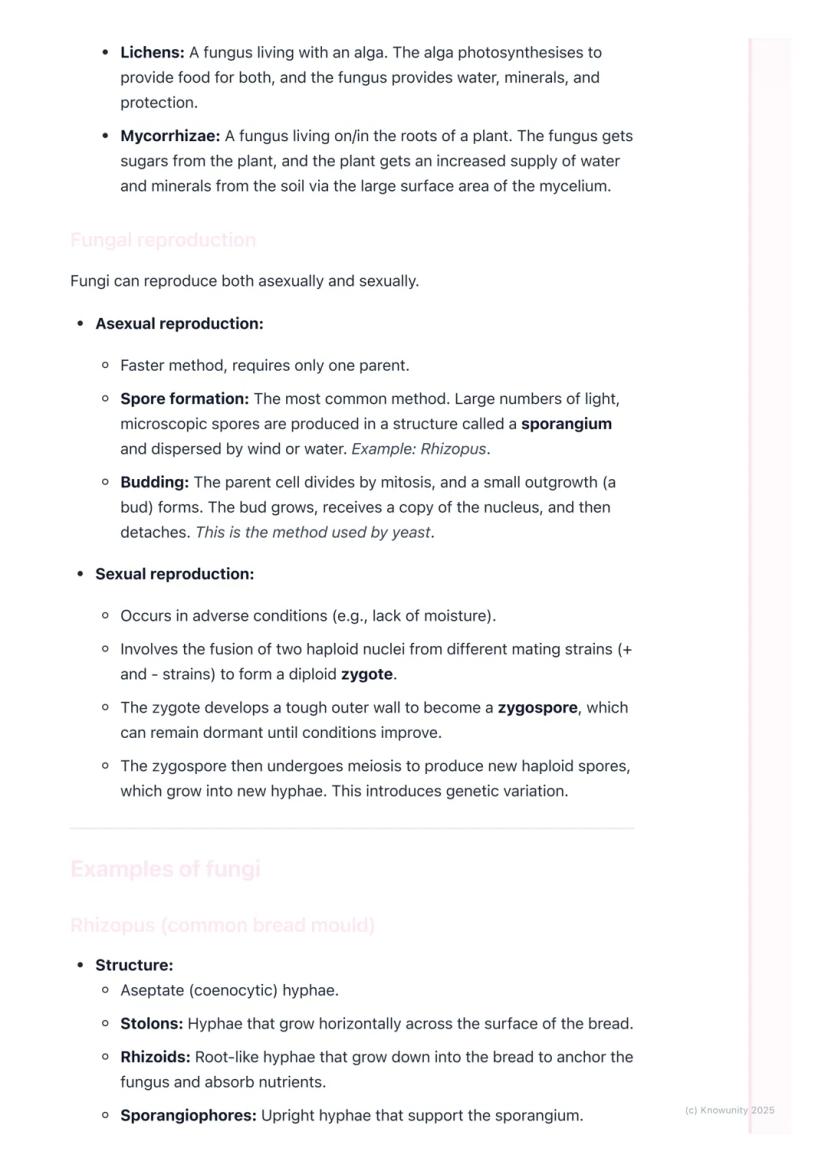
Rhizopus is that black fuzzy mould you've probably seen on old bread. Its structure is perfectly designed for its lifestyle. Stolons grow horizontally across the surface, rhizoids anchor it down and absorb nutrients like roots, and sporangiophores stand upright supporting the black sporangium full of spores.
The life cycle is straightforward. In good conditions, the sporangium bursts and releases thousands of spores. If one lands on suitable food (like your sandwich), it germinates into a new mycelium.
When conditions get rough, sexual reproduction begins. Hyphae from different mating strains grow toward each other, form swellings called gametangia, and their nuclei fuse to create a diploid zygospore.
This zygospore can survive drought and other nasties. When conditions improve, it germinates through meiosis, producing a new sporangiophore and releasing fresh haploid spores.
Visual Memory: Picture Rhizopus like a tiny forest - roots below (rhizoids), stems above (sporangiophores), and seed pods on top (sporangia)!
5
of 7
Yeast - The Unicellular Wonder
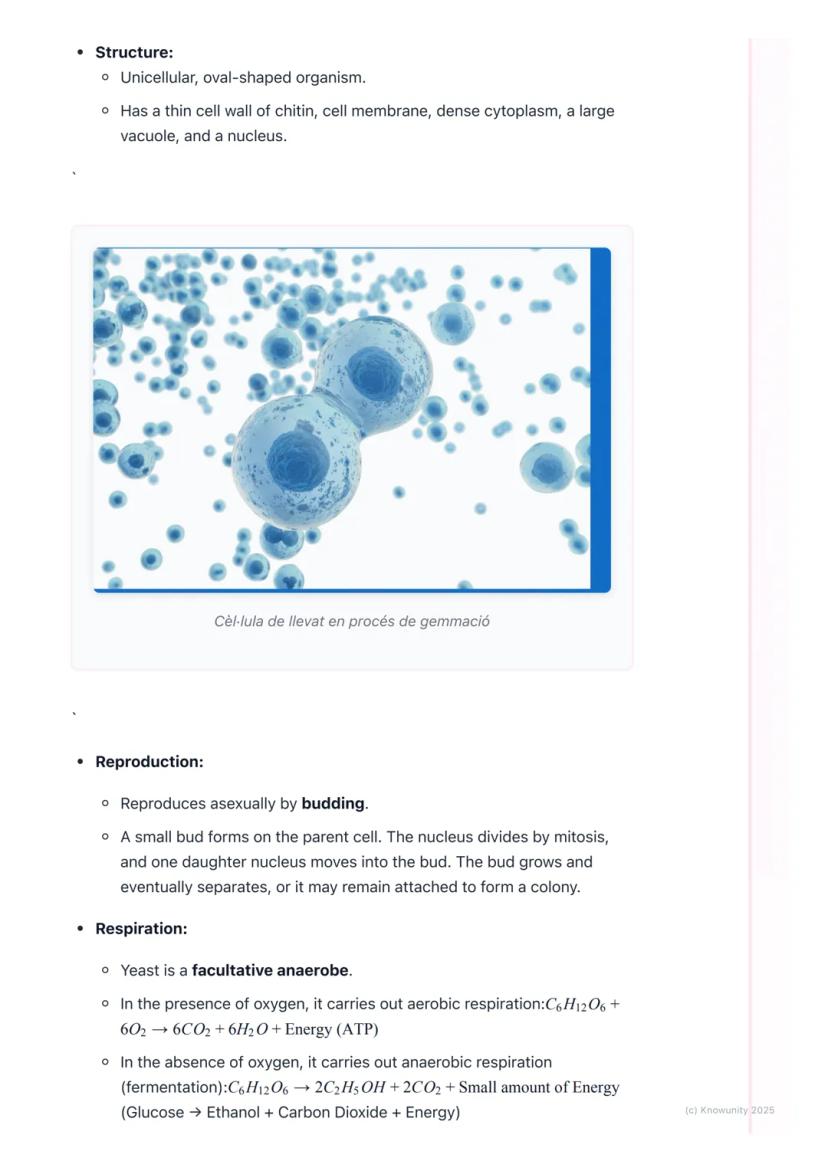
Yeast (Saccharomyces) breaks all the fungal rules by being unicellular and oval-shaped. It's got the typical fungal features - chitin cell wall, nucleus, cytoplasm - but it's all packed into one cell with a large vacuole.
Budding is yeast's reproduction method. A small bud forms, the nucleus divides by mitosis, one daughter nucleus moves into the bud, and eventually it separates (or stays attached to form a colony).
Here's where yeast gets really interesting - it's a facultative anaerobe. With oxygen, it does normal aerobic respiration. Without oxygen, it switches to fermentation, breaking glucose down into ethanol and carbon dioxide.
This fermentation process is why yeast is so economically important. The CO₂ makes bread rise, and the ethanol is essential for brewing alcoholic drinks.
Quick Formula: Glucose → Ethanol + Carbon Dioxide + Energy (that's fermentation in a nutshell!)
6
of 7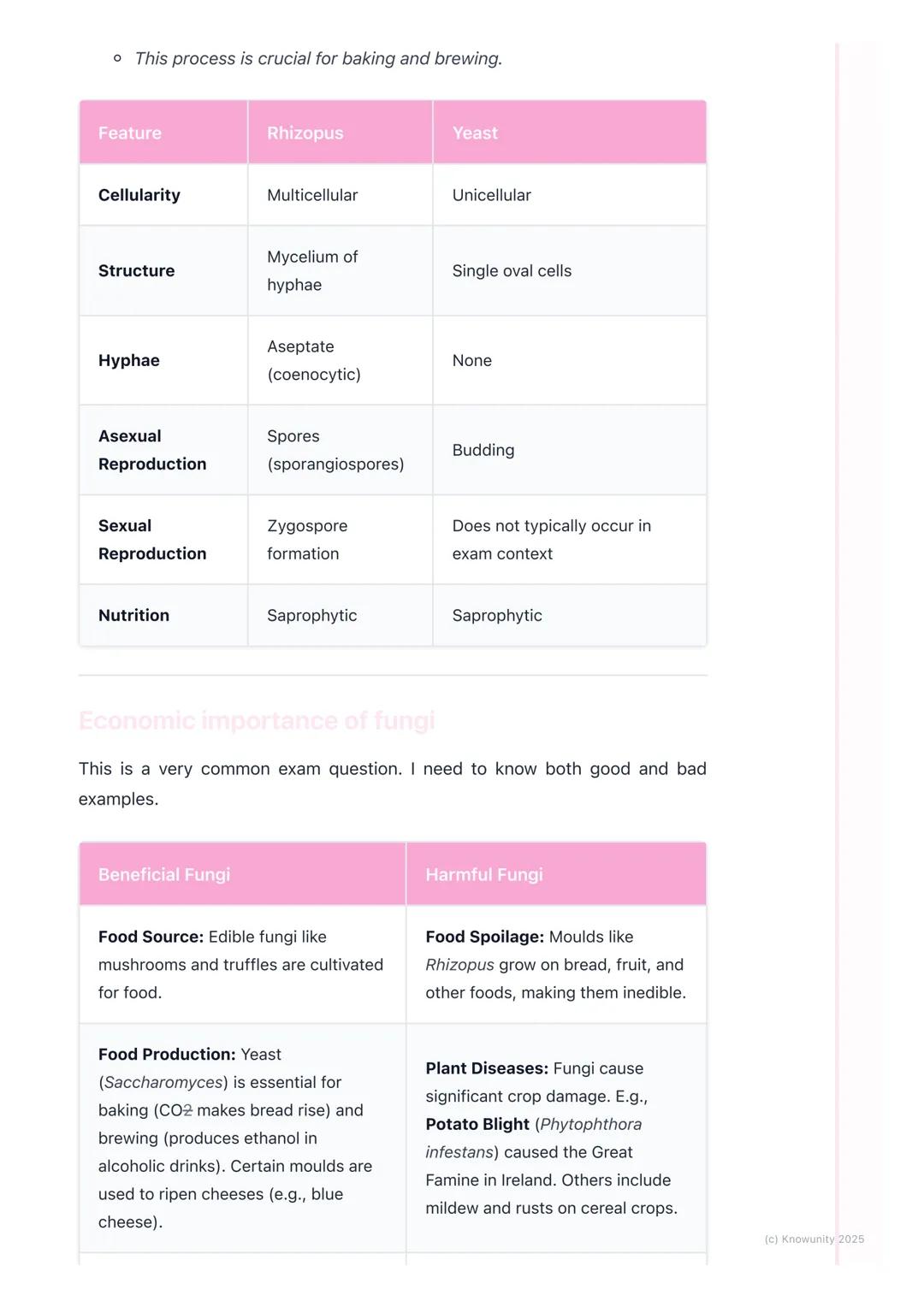
Economic Importance - The Good and Bad
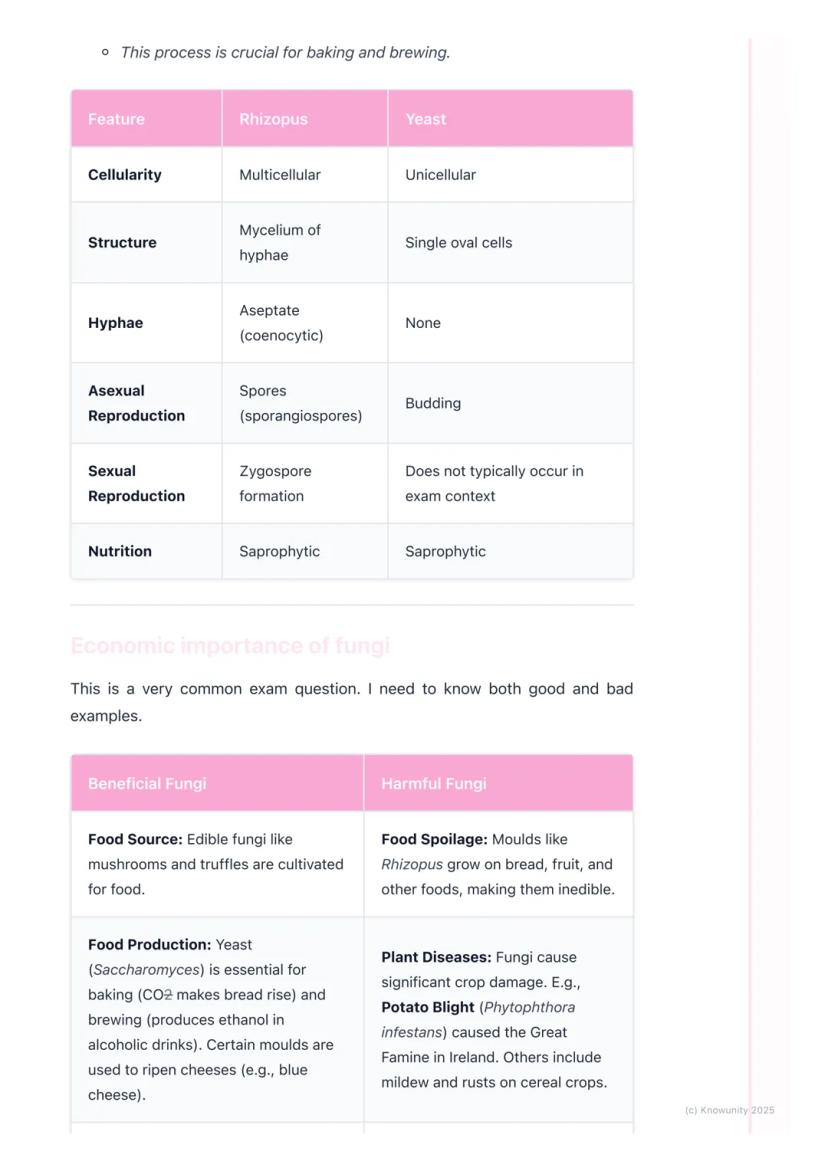
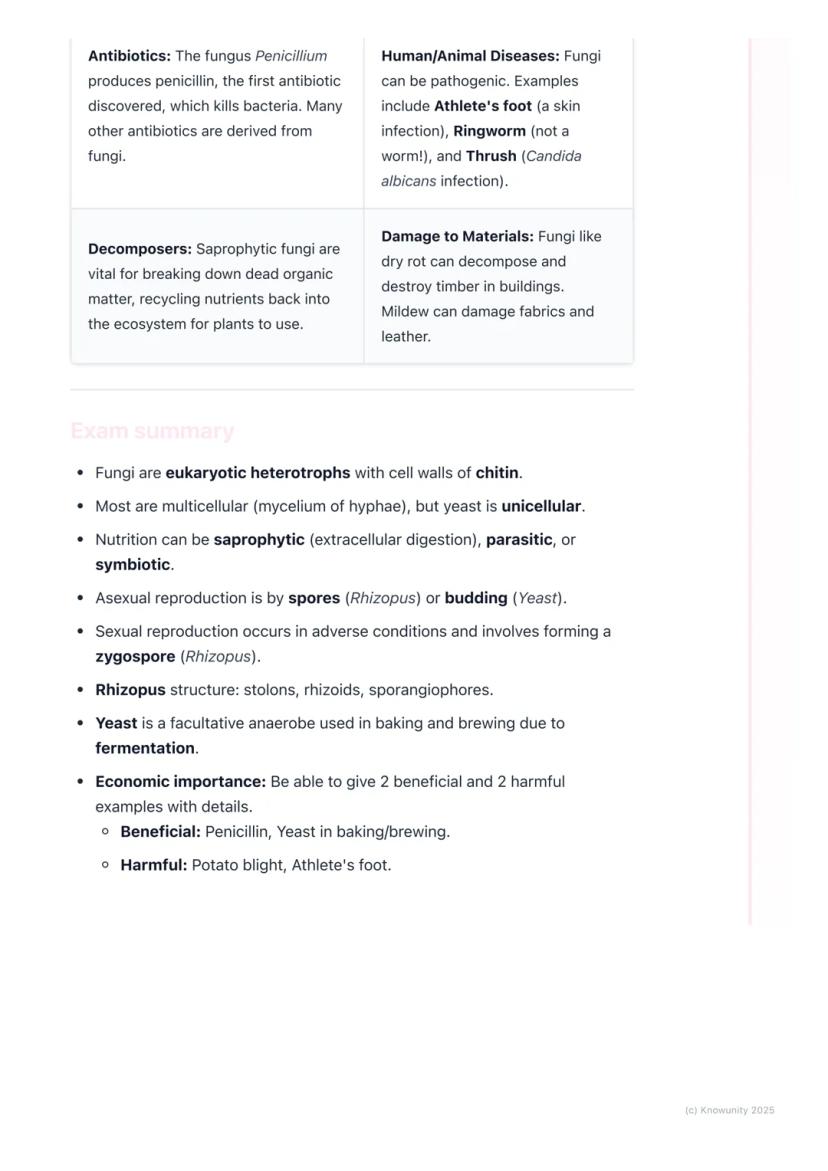
Fungi have a massive impact on human life, and you need to know both sides for your exams. On the beneficial side, edible mushrooms provide food, yeast is essential for baking and brewing, certain moulds ripen cheeses, and Penicillium produces penicillin - the antibiotic that revolutionised medicine.
The harmful side includes food spoilage (like Rhizopus on bread), devastating plant diseases (potato blight caused the Irish Famine), human infections (athlete's foot, ringworm, thrush), and material damage (dry rot destroying timber, mildew damaging fabrics).
As decomposers, saprophytic fungi are absolutely vital for breaking down dead organic matter and recycling nutrients back into ecosystems. Without them, we'd be drowning in dead leaves and fallen trees!
The comparison between Rhizopus and yeast highlights key differences: multicellular vs unicellular, spore production vs budding, and complex mycelial structure vs simple single cells.
Exam Strategy: Always give specific examples - "potato blight caused the Irish Famine" scores more marks than just "plant diseases"!
7
of 7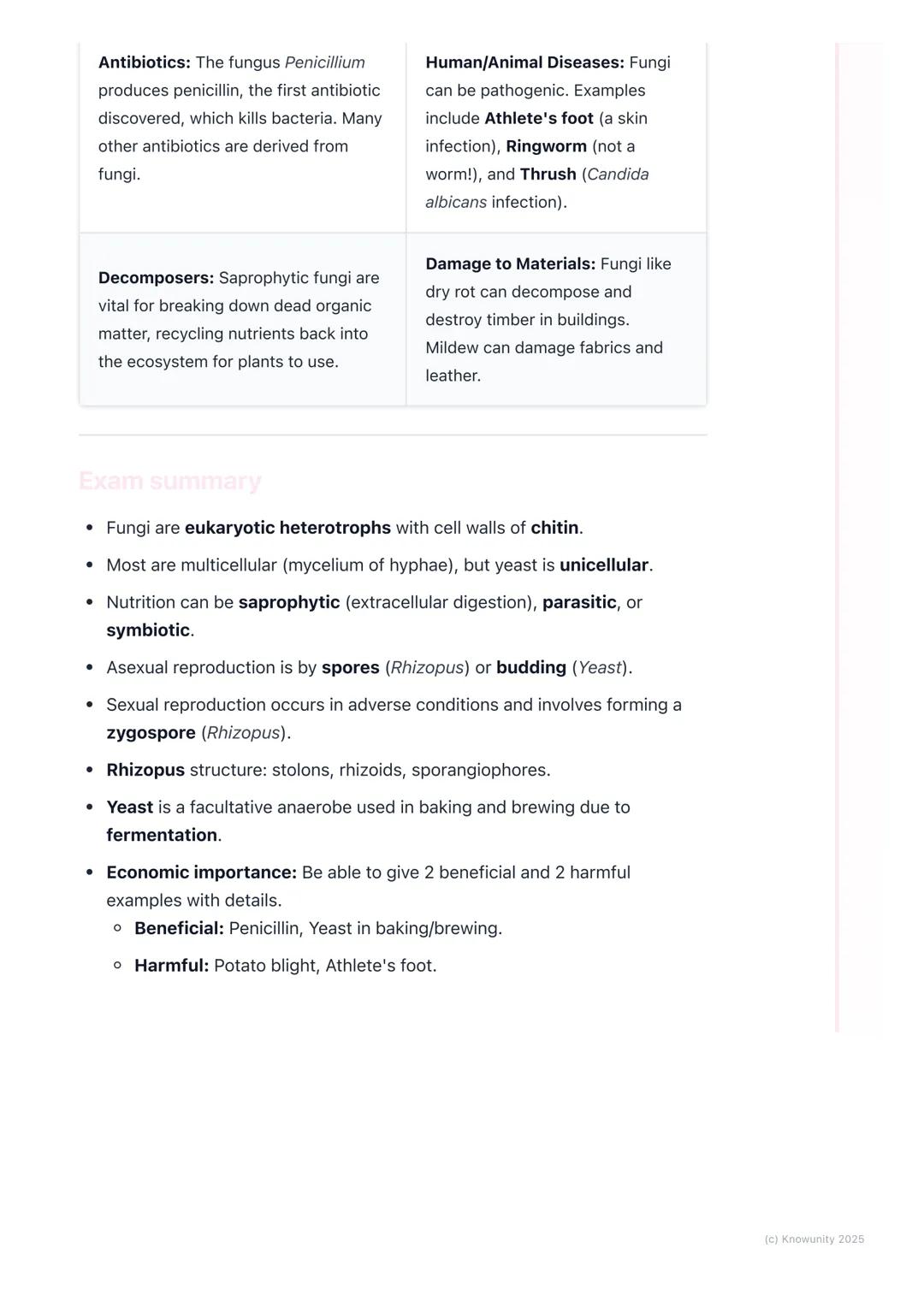
Exam Summary - What You Must Know
For your exams, remember the core concepts: fungi are eukaryotic heterotrophs with chitin cell walls, most form mycelia of hyphae (except unicellular yeast), and they get nutrition through saprophytic, parasitic, or symbiotic relationships.
Rhizopus structure includes stolons, rhizoids, and sporangiophores. Its life cycle involves asexual spore production in good conditions and sexual zygospore formation when stressed.
Yeast reproduces by budding and is a facultative anaerobe - crucial for fermentation in baking and brewing industries.
For economic importance, always give two beneficial examples (like penicillin production and yeast in food) and two harmful ones (like potato blight and athlete's foot) with specific details.
Final Tip: Practice drawing the Rhizopus structure and yeast budding - diagrams are worth serious marks in biology exams!
Pensamos que nunca lo preguntarías...
¿Qué es Knowunity AI companion?
Nuestro compañero de IA está específicamente adaptado a las necesidades de los estudiantes. Basándonos en los millones de contenidos que tenemos en la plataforma, podemos dar a los estudiantes respuestas realmente significativas y relevantes. Pero no se trata solo de respuestas, el compañero también guía a los estudiantes a través de sus retos de aprendizaje diarios, con planes de aprendizaje personalizados, cuestionarios o contenidos en el chat y una personalización del 100% basada en las habilidades y el desarrollo de los estudiantes.
¿Dónde puedo descargar la app Knowunity?
Puedes descargar la app en Google Play Store y Apple App Store.
¿Knowunity es totalmente gratuito?
¡Sí lo es! Tienes acceso totalmente gratuito a todo el contenido de la app, puedes chatear con otros alumnos y recibir ayuda inmeditamente. Puedes ganar dinero utilizando la aplicación, que te permitirá acceder a determinadas funciones.
Contenidos más populares de Biology
8BiologyEcology introduction notes!
Start of the leaving cert ecology chapter
6th Year131
BiologyDNA & RNA
All notes on DNA & RNA including protein synthesis which is a HL topic
5th Year250
BiologyVertebrates and Invertebrates
Students will distinguish between animals that have a backbone (vertebrates) and those that do not (invertebrates), identifying examples of each.
2nd Year240
BiologyBiomolecules: chapter 8
Summary and easily understandable notes to revise chapter 8 biomolecules. Includes good labelled diagrams for visual learners
5th Year210
BiologyCirculatory System
Students will learn about the heart, blood, and blood vessels, and how this system transports oxygen, nutrients, and waste products around the body.
3rd Year140
BiologyRespiration
All respiration notes including simple diagrams and glycolysis and the Krebs cycle
5th Year120
BiologyPhotosynthesis : Biology
Photosynthesis
6th Year371
BiologyPlant Cells
Learning about the unique structures found in plant cells, such as the cell wall, chloroplasts, and large vacuole, and how they differ from animal cells.
1st Year80
Contenidos más populares
9 Irish
IrishIrish oral questions and answers
Questions and answers for the leaving cert oral
5th Year4264
 English
Key Quotes : Sive
Key Quotes and explanations: Sive
6th Year2842
IrishIrish oral questions
Outline of oral questions
5th Year2055
IrishIníon- le hÁine Durkin
Aine Durkin’s poem, Iníon: Themes & summary
5th Year850
IrishIrish poetry 2027
Iníon + Dínit an Bhróin
5th Year1133
IrishLC HL notes- Iníon (poem)
Includes poem in English and Irish, theme, key words & phrases
5th Year2284
EnglishCultural Context : Shawshank Redemption : Sive : Small Things Like These
Comparative Study : Cultural Context : Shawshank Redemption, Sive and Small Things Like These
6th Year1430
IrishMo Ghrá-sa (Idir Lúibíní)
Notes on mo ghrá-sa
5th Year380
IrishAn Gaeilge Aiste
Irish Language essay
6th Year1320
¿No encuentras lo que buscas? Explora otros temas.
Mira lo que dicen nuestros usuarios. Les encantó — y a ti también te encantará.
4.6/5App Store
4.7/5Google Play
La app es muy fácil de usar y está muy bien diseñada. Hasta ahora he encontrado todo lo que estaba buscando y he podido aprender mucho de las presentaciones. Definitivamente utilizaré la aplicación para un examen de clase. Y, por supuesto, también me sirve mucho de inspiración.
Pablousuario de iOS
Esta app es realmente genial. Hay tantos apuntes de clase y ayuda [...]. Tengo problemas con matemáticas, por ejemplo, y la aplicación tiene muchas opciones de ayuda. Gracias a Knowunity, he mejorado en mates. Se la recomiendo a todo el mundo.
Elenausuaria de Android
Vaya, estoy realmente sorprendida. Acabo de probar la app porque la he visto anunciada muchas veces y me he quedado absolutamente alucinada. Esta app es LA AYUDA que quieres para el insti y, sobre todo, ofrece muchísimas cosas, como ejercicios y hojas informativas, que a mí personalmente me han sido MUY útiles.
Anausuaria de iOS
Biology5 visualizaciones·Actualizado Jun 10, 2026·7 páginasUnderstanding Fungi: Characteristics and Importance
Fungi are everywhere around you - from the mushrooms on your pizza to the yeast that makes bread rise, and even the mould that grows on forgotten leftovers! They're neither plants nor animals but form their own unique kingdom with...
1
of 7
Inscríbete para ver los apuntes. ¡Es gratis!
- Acceso a todos los documentos
- Mejora tus notas
- Únete a millones de estudiantes
What Makes Fungi Special?
Think of fungi as nature's recyclers with a twist - they're eukaryotic organisms that can't make their own food like plants do. Instead, they're heterotrophic, meaning they need to get their nutrients from other sources.
Here's what sets them apart: their cell walls are made of chitin (the same stuff in insect shells), not cellulose like plants. Most fungi are built from microscopic threads called hyphae, which weave together to form a network called a mycelium - basically the main body of the fungus that's often hidden underground.
The key terms you need to know include saprophytes (decomposers that feed on dead stuff), parasites (fungi that harm their hosts), and extracellular digestion (they secrete enzymes outside their body to break down food before absorbing it).
Remember: Fungi store food as glycogen, just like animals do, not starch like plants!
2
of 7Inscríbete para ver los apuntes. ¡Es gratis!
- Acceso a todos los documentos
- Mejora tus notas
- Únete a millones de estudiantes
Fungal Structure and How They Feed
Fungi come in two main structural types. Aseptate hyphae (like in Rhizopus) are basically long tubes with many nuclei floating around - no dividing walls. Septate hyphae have cross-walls with pores that let stuff move between compartments.
Saprophytic nutrition is how most fungi survive - they're the ultimate decomposers. The mycelium spreads over dead organic matter, secretes digestive enzymes, breaks everything down into simple molecules, then absorbs the nutrients. This process is crucial for recycling nutrients in ecosystems.
Some fungi are parasites that harm living hosts (think athlete's foot), whilst others form beneficial partnerships. Lichens are fungi teamed up with algae, and mycorrhizae are fungi living with plant roots - both organisms benefit from these relationships.
Key Point: Yeast is the odd one out - it's unicellular and doesn't form a mycelium at all!
3
of 7Inscríbete para ver los apuntes. ¡Es gratis!
- Acceso a todos los documentos
- Mejora tus notas
- Únete a millones de estudiantes
How Fungi Reproduce
Fungi are pretty clever when it comes to reproduction - they've got options! Asexual reproduction is the quick and easy method when conditions are good. Most fungi produce loads of lightweight spores in structures called sporangia, which get dispersed by wind or water.
Yeast does things differently - it reproduces by budding. A small bud forms on the parent cell, gets a copy of the nucleus through mitosis, grows, and eventually breaks off to live independently.
Sexual reproduction kicks in when times get tough. Two different mating strains come together, their nuclei fuse to create a zygospore with a tough outer wall that can survive harsh conditions. When things improve, the zygospore undergoes meiosis to produce new spores with genetic variation.
Exam Tip: Remember that sexual reproduction in fungi introduces genetic variation and helps them survive adverse conditions!
4
of 7Inscríbete para ver los apuntes. ¡Es gratis!
- Acceso a todos los documentos
- Mejora tus notas
- Únete a millones de estudiantes
Rhizopus - The Bread Mould
Rhizopus is that black fuzzy mould you've probably seen on old bread. Its structure is perfectly designed for its lifestyle. Stolons grow horizontally across the surface, rhizoids anchor it down and absorb nutrients like roots, and sporangiophores stand upright supporting the black sporangium full of spores.
The life cycle is straightforward. In good conditions, the sporangium bursts and releases thousands of spores. If one lands on suitable food (like your sandwich), it germinates into a new mycelium.
When conditions get rough, sexual reproduction begins. Hyphae from different mating strains grow toward each other, form swellings called gametangia, and their nuclei fuse to create a diploid zygospore.
This zygospore can survive drought and other nasties. When conditions improve, it germinates through meiosis, producing a new sporangiophore and releasing fresh haploid spores.
Visual Memory: Picture Rhizopus like a tiny forest - roots below (rhizoids), stems above (sporangiophores), and seed pods on top (sporangia)!
5
of 7Inscríbete para ver los apuntes. ¡Es gratis!
- Acceso a todos los documentos
- Mejora tus notas
- Únete a millones de estudiantes
Yeast - The Unicellular Wonder
Yeast (Saccharomyces) breaks all the fungal rules by being unicellular and oval-shaped. It's got the typical fungal features - chitin cell wall, nucleus, cytoplasm - but it's all packed into one cell with a large vacuole.
Budding is yeast's reproduction method. A small bud forms, the nucleus divides by mitosis, one daughter nucleus moves into the bud, and eventually it separates (or stays attached to form a colony).
Here's where yeast gets really interesting - it's a facultative anaerobe. With oxygen, it does normal aerobic respiration. Without oxygen, it switches to fermentation, breaking glucose down into ethanol and carbon dioxide.
This fermentation process is why yeast is so economically important. The CO₂ makes bread rise, and the ethanol is essential for brewing alcoholic drinks.
Quick Formula: Glucose → Ethanol + Carbon Dioxide + Energy (that's fermentation in a nutshell!)
6
of 7Inscríbete para ver los apuntes. ¡Es gratis!
- Acceso a todos los documentos
- Mejora tus notas
- Únete a millones de estudiantes
Economic Importance - The Good and Bad
Fungi have a massive impact on human life, and you need to know both sides for your exams. On the beneficial side, edible mushrooms provide food, yeast is essential for baking and brewing, certain moulds ripen cheeses, and Penicillium produces penicillin - the antibiotic that revolutionised medicine.
The harmful side includes food spoilage (like Rhizopus on bread), devastating plant diseases (potato blight caused the Irish Famine), human infections (athlete's foot, ringworm, thrush), and material damage (dry rot destroying timber, mildew damaging fabrics).
As decomposers, saprophytic fungi are absolutely vital for breaking down dead organic matter and recycling nutrients back into ecosystems. Without them, we'd be drowning in dead leaves and fallen trees!
The comparison between Rhizopus and yeast highlights key differences: multicellular vs unicellular, spore production vs budding, and complex mycelial structure vs simple single cells.
Exam Strategy: Always give specific examples - "potato blight caused the Irish Famine" scores more marks than just "plant diseases"!
7
of 7Inscríbete para ver los apuntes. ¡Es gratis!
- Acceso a todos los documentos
- Mejora tus notas
- Únete a millones de estudiantes
Exam Summary - What You Must Know
For your exams, remember the core concepts: fungi are eukaryotic heterotrophs with chitin cell walls, most form mycelia of hyphae (except unicellular yeast), and they get nutrition through saprophytic, parasitic, or symbiotic relationships.
Rhizopus structure includes stolons, rhizoids, and sporangiophores. Its life cycle involves asexual spore production in good conditions and sexual zygospore formation when stressed.
Yeast reproduces by budding and is a facultative anaerobe - crucial for fermentation in baking and brewing industries.
For economic importance, always give two beneficial examples (like penicillin production and yeast in food) and two harmful ones (like potato blight and athlete's foot) with specific details.
Final Tip: Practice drawing the Rhizopus structure and yeast budding - diagrams are worth serious marks in biology exams!
Pensamos que nunca lo preguntarías...
¿Qué es Knowunity AI companion?
Nuestro compañero de IA está específicamente adaptado a las necesidades de los estudiantes. Basándonos en los millones de contenidos que tenemos en la plataforma, podemos dar a los estudiantes respuestas realmente significativas y relevantes. Pero no se trata solo de respuestas, el compañero también guía a los estudiantes a través de sus retos de aprendizaje diarios, con planes de aprendizaje personalizados, cuestionarios o contenidos en el chat y una personalización del 100% basada en las habilidades y el desarrollo de los estudiantes.
¿Dónde puedo descargar la app Knowunity?
Puedes descargar la app en Google Play Store y Apple App Store.
¿Knowunity es totalmente gratuito?
¡Sí lo es! Tienes acceso totalmente gratuito a todo el contenido de la app, puedes chatear con otros alumnos y recibir ayuda inmeditamente. Puedes ganar dinero utilizando la aplicación, que te permitirá acceder a determinadas funciones.
Contenidos más populares de Biology
8BiologyEcology introduction notes!
Start of the leaving cert ecology chapter
6th Year131
BiologyDNA & RNA
All notes on DNA & RNA including protein synthesis which is a HL topic
5th Year250
BiologyVertebrates and Invertebrates
Students will distinguish between animals that have a backbone (vertebrates) and those that do not (invertebrates), identifying examples of each.
2nd Year240
BiologyBiomolecules: chapter 8
Summary and easily understandable notes to revise chapter 8 biomolecules. Includes good labelled diagrams for visual learners
5th Year210
BiologyCirculatory System
Students will learn about the heart, blood, and blood vessels, and how this system transports oxygen, nutrients, and waste products around the body.
3rd Year140
BiologyRespiration
All respiration notes including simple diagrams and glycolysis and the Krebs cycle
5th Year120
BiologyPhotosynthesis : Biology
Photosynthesis
6th Year371
BiologyPlant Cells
Learning about the unique structures found in plant cells, such as the cell wall, chloroplasts, and large vacuole, and how they differ from animal cells.
1st Year80
Contenidos más populares
9IrishIrish oral questions and answers
Questions and answers for the leaving cert oral
5th Year4264
EnglishKey Quotes : Sive
Key Quotes and explanations: Sive
6th Year2842
IrishIrish oral questions
Outline of oral questions
5th Year2055
IrishIníon- le hÁine Durkin
Aine Durkin’s poem, Iníon: Themes & summary
5th Year850
IrishIrish poetry 2027
Iníon + Dínit an Bhróin
5th Year1133
IrishLC HL notes- Iníon (poem)
Includes poem in English and Irish, theme, key words & phrases
5th Year2284
EnglishCultural Context : Shawshank Redemption : Sive : Small Things Like These
Comparative Study : Cultural Context : Shawshank Redemption, Sive and Small Things Like These
6th Year1430
IrishMo Ghrá-sa (Idir Lúibíní)
Notes on mo ghrá-sa
5th Year380
IrishAn Gaeilge Aiste
Irish Language essay
6th Year1320
¿No encuentras lo que buscas? Explora otros temas.
Mira lo que dicen nuestros usuarios. Les encantó — y a ti también te encantará.
4.6/5App Store
4.7/5Google Play
La app es muy fácil de usar y está muy bien diseñada. Hasta ahora he encontrado todo lo que estaba buscando y he podido aprender mucho de las presentaciones. Definitivamente utilizaré la aplicación para un examen de clase. Y, por supuesto, también me sirve mucho de inspiración.
Pablousuario de iOS
Esta app es realmente genial. Hay tantos apuntes de clase y ayuda [...]. Tengo problemas con matemáticas, por ejemplo, y la aplicación tiene muchas opciones de ayuda. Gracias a Knowunity, he mejorado en mates. Se la recomiendo a todo el mundo.
Elenausuaria de Android
Vaya, estoy realmente sorprendida. Acabo de probar la app porque la he visto anunciada muchas veces y me he quedado absolutamente alucinada. Esta app es LA AYUDA que quieres para el insti y, sobre todo, ofrece muchísimas cosas, como ejercicios y hojas informativas, que a mí personalmente me han sido MUY útiles.
Anausuaria de iOS